

How the San Fernando Valley Developed Into Porter Ranch and LA’s Residential Core
How did the San Fernando Valley transform from open ranchland into one of Los Angeles’ largest residential regions, and where does Porter Ranch fit in that story?
The San Fernando Valley evolved from Spanish-era ranchos into a residential powerhouse through water infrastructure, freeway expansion, and postwar suburbanization, with Porter Ranch emerging as one of its final and most desirable master-planned communities.
Why This Matters If You’re Buying or Selling in Porter Ranch Right Now
Understanding how Porter Ranch came to be is not just a history lesson. It directly affects how you should think about your real estate decisions today. When you know that this community sits on the last developed frontier of the San Fernando Valley, backed by the Santa Susana Mountains with no room for sprawl beyond it, you understand why inventory stays tight and values hold firm. As of June 2026, the median single-family sale price in Porter Ranch hit $1,262,000, with prices up 3.3% year-over-year, per local MLS data. That resilience is rooted in geography, planning, and over a century of incremental development that funneled demand northwest.
With over 21 years of experience and more than 500 closed transactions across the San Fernando Valley, I have watched Porter Ranch mature from a community still adding new phases to one of LA’s most sought-after suburban addresses. Let me walk you through how we got here.
From Spanish Ranchos to Wheat Fields: Porter Ranch’s Origin Story
You cannot understand Porter Ranch without understanding its name. In 1874, Charles Maclay and George K. Porter purchased large portions of the northern San Fernando Valley from the former Rancho Ex-Mission San Fernando. Porter and his partners established ranching operations on what is now the northwest Valley. Meanwhile, the southern half was held by the San Fernando Homestead Association, founded by Isaac Van Nuys and J.B. Lankershim, who turned the flat valley floor into some of the most productive dry wheat farmland in California.
That same year, 1874, the Southern Pacific Railroad completed its rail line to the northeast end of the Valley. Before that, the entire San Fernando Valley was rural. The Lopez family had built the first two-story adobe residential structure in the Valley and opened its first post office in 1869. These were the seeds of settlement, but the Valley was still decades away from becoming residential.
So what changed everything? Water.
The Los Angeles Aqueduct and the Moment Porter Ranch Became Possible
The single most important event in the Valley’s residential development was the completion of the Los Angeles Aqueduct in 1913. This infrastructure project, at the time the country’s largest municipal water system, delivered surplus water from the Owens Valley and made large-scale development feasible for the first time. Before the aqueduct, the Valley’s growth was limited by the Los Angeles River’s capacity. After it, the vision shifted permanently from agriculture to suburban housing.
In 1915, the Valley voted to annex into the City of Los Angeles to secure access to that water supply. That same year, Universal City officially opened, beginning the entertainment industry’s long presence in the Valley that would influence residential demand for decades.
How Water and Annexation Created the Growth Framework
The annexation triggered long-range development planning, including the formation in 1909 of The Los Angeles Suburban Homes Company. A new Pacific Electric Railway line encouraged expansion of population centers. By 1940, the Valley’s population had grown to over 155,000 residents, per historical census data.
What I tell my clients is this: every major residential pocket of the San Fernando Valley, including Porter Ranch, exists because of decisions made between 1913 and 1915. If you are investing in Porter Ranch real estate today, you are benefiting from infrastructure that was visionary over a century ago.
The Postwar Boom That Made the Valley a Residential Giant
If the aqueduct made development possible, World War II made it inevitable. Between 1945 and 1950, the Valley’s population nearly doubled from 230,000 to 403,000 residents, according to historical population records. Returning veterans used GI Bill financing to purchase standardized tract homes, and the Valley’s abundant citrus and walnut groves were subdivided into new neighborhoods at a staggering pace.
From 1950 to 1960, the San Fernando Valley outgrew all other major city areas in the United States, vaulting from the 25th to the 9th largest urban center in the nation. FHA financing in the 1930s had already established the pattern, but the postwar era supercharged it. By the mid-1950s, most of the Valley had transitioned from agricultural land to residential and commercial use.
What Does This Mean for Porter Ranch Specifically?
Here is where the story gets personal for this community. By the 1980s, most of the San Fernando Valley was fully built out. Home seekers began looking to the periphery, and the northwest Valley, where the Porter family’s original ranch lands had been held for over a century, became the next development frontier. The homes built in this later era tended to be larger and newer than the Valley’s existing stock. That is exactly why Porter Ranch today features the kind of master-planned, modern construction that sets it apart from older Valley neighborhoods like Van Nuys or Sherman Oaks.
The opening of the Simi Valley/Ronald Reagan Freeway (SR-118) in 1979, expanded to Moorpark in 1993, gave Porter Ranch the freeway access it needed to function as a commuter suburb. Without the 118, the northwest Valley would not have developed as rapidly or as affluently as it did.
Porter Ranch Today: The Culmination of 150 Years of Valley Development
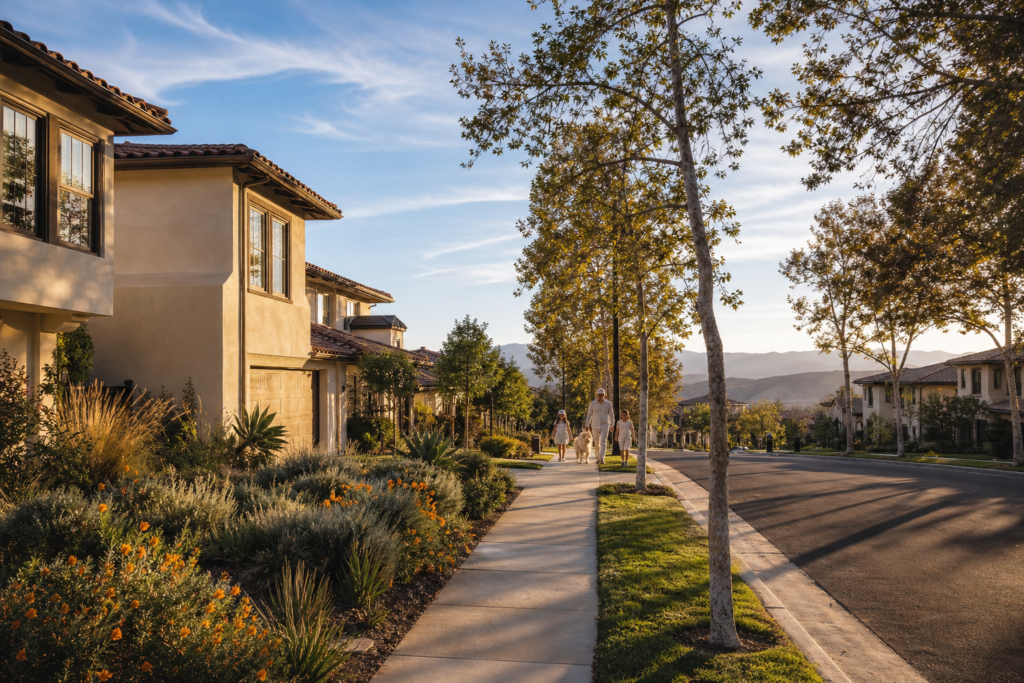
Porter Ranch is one of the newest parts of Los Angeles, and that newness is evident everywhere you look. Wide streets, master-planned neighborhoods, guard-gated enclaves like Westcliffe and The Ridge, and new construction from builders like Toll Brothers define the community’s character.
I have guided clients through Toll Brothers developments in Porter Ranch, from lot selection and upgrade negotiations to closing strategy. These new construction communities, including the final phases at The Ridge through 2026 and a 150-home pipeline into Q4 2026, represent the continuation of the same development story that began with George K. Porter’s original land purchase.
The Numbers That Prove Porter Ranch’s Position
- Median single-family sale price: $1,262,000 as of June 2026, per local MLS data
- Year-over-year price growth: 3.3% as of June 2026
- List-to-sale ratio: 99.1% as of June 2026
- Median days on market: 22 days as of June 2026
- Population: approximately 38,041, per 2020 Census data
- Homeownership rate: 71.8%, per Census data
- Median household income: $148,281, per Census data
The luxury segment runs even higher. Westcliffe Porter Ranch ranges from approximately $2.2M to $4.8M, The Ridge from $2.5M to $5.2M, and Avila Porter Ranch from $3.1M to $6.5M, according to recent market data.
With 103 client reviews at a 5.0 out of 5.0 average rating and recognition as a top 1.5% agent nationwide by RealTrends, I can tell you that Porter Ranch’s demand is driven by the same fundamentals that built the Valley: infrastructure, schools, space, and smart planning.
How the Valley’s Development Pattern Shapes Your Buying and Selling Strategy in Porter Ranch
If you are considering buying or selling in Porter Ranch, the historical context matters more than you might think. This community cannot sprawl further north because of the Santa Susana Mountains. The 118 Freeway corridor anchors its connectivity. The Vineyards at Porter Ranch, located at Rinaldi Street and Porter Ranch Drive, has become the social and commercial heart of the neighborhood with Whole Foods, restaurants like Salina and Finney’s Crafthouse, and community gathering spaces.
Trail access at Limekiln Canyon and Aliso Canyon Park gives residents outdoor escapes without leaving the neighborhood. And yes, large portions of Steven Spielberg’s *E.T. the Extra-Terrestrial* were filmed right here, with Brasilia Dr. and Killimore Ave. appearing throughout the film.
Because Porter Ranch was one of the Valley’s last major residential developments, its housing stock is newer, its streets are wider, and its planning is more intentional than most Valley neighborhoods. That is exactly why the median price per square foot of $526, as of 2026 market data, represents strong value compared to the Westside’s $800 to $1,500 range.
Frequently Asked Questions
When did the San Fernando Valley become part of Los Angeles?
The Valley voted to annex into the City of Los Angeles in 1915, primarily to gain access to the water supplied by the Los Angeles Aqueduct, which was completed in 1913. This annexation was the pivotal moment that shifted the Valley from an agricultural region to a future residential powerhouse.
Why is Porter Ranch named Porter Ranch?
The community takes its name from George K. Porter, who, along with Charles Maclay, purchased large portions of the northern San Fernando Valley in 1874 from the former Rancho Ex-Mission San Fernando. Porter established ranching operations on what would eventually become the residential community you see today.
How fast did the San Fernando Valley grow after World War II?
Growth was explosive. The Valley’s population nearly doubled between 1945 and 1950, jumping from 230,000 to 403,000 residents, per historical census records. From 1950 to 1960, the Valley outgrew all other major city areas in the United States.
What role did the Los Angeles Aqueduct play in Valley development?
The aqueduct, completed in 1913 as the country’s largest municipal water system at the time, delivered Owens Valley water to Los Angeles and made large-scale residential development in the San Fernando Valley feasible for the first time. Without it, the Valley would have remained agricultural.
When was Porter Ranch developed as a residential community?
Large-scale residential development in Porter Ranch began in the 1970s and 1980s, making it one of the last major planned communities built in the San Fernando Valley. Its newer housing stock is a direct result of this later development timeline.
What is the median home price in Porter Ranch in 2026?
The median single-family sale price was $1,262,000 as of June 2026, per local MLS data. Year-over-year, prices were up 3.3%. Luxury gated communities like Avila Porter Ranch can reach $3.1M to $6.5M.
How did the 118 Freeway affect Porter Ranch real estate?
The Ronald Reagan Freeway (SR-118), which opened in 1979 and was expanded to Moorpark in 1993, provided the highway access that made Porter Ranch viable as a commuter-friendly residential community. It remains the primary east-west corridor serving the neighborhood.
Is Porter Ranch still building new homes?
Yes. Toll Brothers completed final phases at The Ridge through Q2 2026, with a 150-home pipeline extending into Q4 2026, according to market reports. A mixed-use expansion at Porter Ranch Town Center, approved by the city planning commission, points to continued neighborhood growth through 2027.
What makes Porter Ranch different from older Valley neighborhoods?
Because Porter Ranch was developed decades after communities like Van Nuys, North Hollywood, and Sherman Oaks, its homes are newer, its streets are wider, and its neighborhoods are more intentionally master-planned. The homeownership rate of 71.8%, per Census data, also runs significantly higher than the Valley average.
How does Porter Ranch real estate compare to the Westside?
Porter Ranch offers substantially more space per dollar. The median price per square foot is approximately $526 as of 2026, compared to $800 to $1,500 per square foot in Westside neighborhoods, according to comparative market data. You get newer construction, larger lots, and mountain views at a fraction of the cost.
The Bottom Line
The San Fernando Valley’s transformation from open ranchland to one of America’s largest residential regions took over 150 years of water infrastructure, rail and freeway construction, wartime population surges, and deliberate planning. Porter Ranch sits at the end of that timeline as one of the Valley’s finest achievements: a master-planned community backed by mountains, served by top schools, and still adding new construction in 2026.
If you are thinking about buying or selling in Porter Ranch, I would welcome the conversation. As the founder of the Scott Himelstein Group, a Certified Trust and Probate Expert, and someone who has closed over 500 transactions across the San Fernando Valley, I know how each pocket of this community behaves, what drives demand, and how to position you for the best possible outcome. Call me at 818-396-3311 or visit ScottWorks4u.com.
Work with Scott