

Granada Hills’ Community Identity and What Makes It Feel Like Home
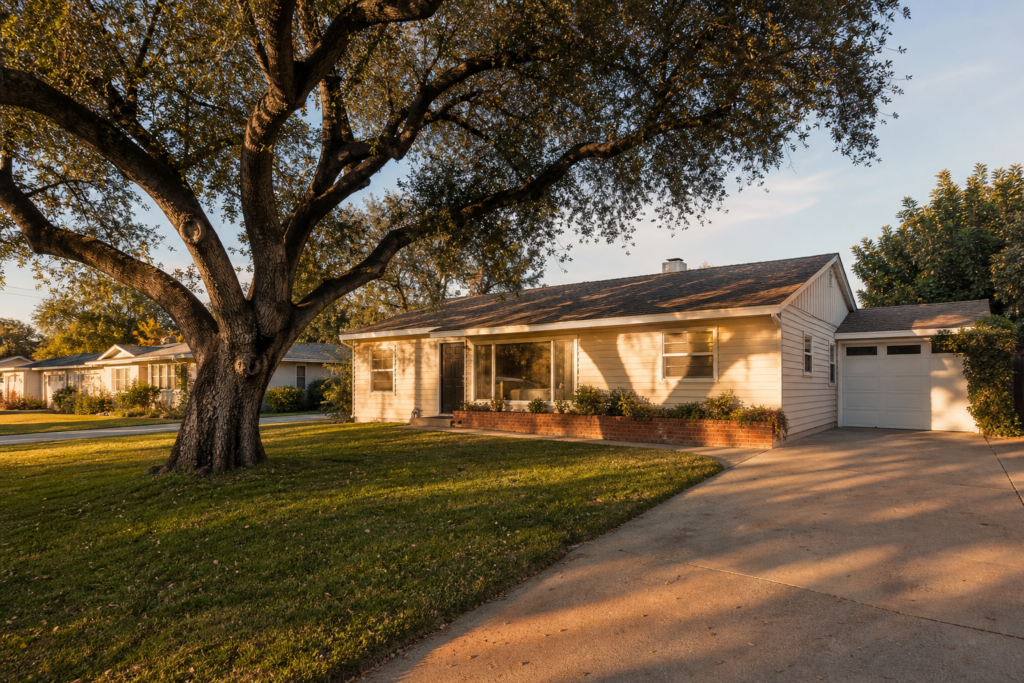
What defines Granada Hills’ community identity, and why does its suburban character continue to attract buyers in 2026?
Granada Hills is one of the San Fernando Valley’s most authentically suburban neighborhoods, where 73% of residents own their homes, the median age runs about 20% older than the LA citywide average, and the community actively protects its low-density, family-first character, according to U.S. Census data.
Why Granada Hills’ Suburban Identity Matters Right Now
If you are considering a move to the northwest San Fernando Valley, or if you already live here and want to understand what is driving your home’s value, Granada Hills’ community identity is not just a feel-good story. It is the single biggest factor shaping real estate demand and long-term appreciation in this market.
With a median sold price of $1,000,000 as of September 2026, per Resideline data, and a 3-year appreciation trend of 5.6% according to CoreLogic, Granada Hills consistently outperforms less character-driven neighborhoods. And that is not an accident. The community’s resistance to densification, its charter school reputation, and its proximity to 672 acres of open space at O’Melveny Park all feed into a suburban identity that buyers are willing to pay a measurable premium for.
Having closed over 500 transactions across the San Fernando Valley in my 21-plus years in this business, I can tell you that Granada Hills is one of the few neighborhoods where “community character” is not a marketing buzzword. It is a real, tangible force that shapes pricing, demand, and quality of life.
How Granada Hills Built Its Suburban Character Over Nearly a Century
You cannot understand what Granada Hills is today without understanding where it came from. The modern community was founded in 1926, originally just called “Granada,” with the “Hills” added about 15 years later to distinguish it from a Northern California town. But the real transformation happened after World War II, when developers built the tract homes, many of them classic ranch houses, that still define the streetscape today.
Granada Hills South was largely built out between the late 1950s and early 1970s, with a core of ranch-style single-family homes. The typical home runs 3 to 4 bedrooms, 1,400 to 2,200 square feet, on lots ranging from 6,000 to over 10,000 square feet. That generous lot size is something you simply cannot replicate in newer developments, and it is one of the main reasons families choose Granada Hills over master-planned communities nearby.
What I tell my clients who are cross-shopping between Granada Hills and adjacent Porter Ranch is this: Porter Ranch gives you newer construction and modern finishes. Granada Hills gives you mature trees, wider lots, and a neighborhood that has had decades to develop real roots. Both are excellent choices, but they serve different priorities. Because I have built my business working Porter Ranch consistently, understanding luxury estates, new construction by builders like Toll Brothers, and resale properties, I see firsthand how buyers weigh these trade-offs every single week.
The housing stock also includes pockets of mid-century modern properties, including Eichler-style homes known for their post-and-beam construction and integration of indoor-outdoor living. These architectural details give Granada Hills a visual identity that feels distinctly Southern California.
The Streets, Schools, and Landmarks That Define Granada Hills Daily Life
So what does this suburban identity actually look and feel like on the ground? You experience it in very specific, tangible ways.
The Corridors That Anchor the Community
Your daily life in Granada Hills South revolves around a handful of key streets:
- Balboa Boulevard is the north-south spine, lined with neighborhood businesses like Italia Bakery and Deli at 11134 Balboa Blvd, Pizza Cookery at 10371 Balboa Blvd, and Victory Produce at 10365 Balboa Blvd
- Chatsworth Street is the east-west main drag, home to the Granada Hills Recreation Center at 16730 Chatsworth St, where youth sports leagues and community programs run year-round
- Zelzah Avenue anchors the institutional corridor, with Granada Hills Charter High School at 10535 Zelzah Ave
You will also find House Roots Coffee for your morning stop, Lulu Bee Haven for weekend brunch, and the Odyssey Restaurant up in the hills for special occasions with panoramic Valley views. These are the kinds of businesses where regulars know the staff by name, and that matters more than you might think when you are evaluating where to put down roots.
The School Premium Is Real
Granada Hills Charter High School is the single biggest demand driver in this market. It holds a GreatSchools Rating of 9 out of 10, ranks number 35 among all public high schools in California according to Niche with an A-plus overall grade, and enrolls 6,014 students with an average GPA of 3.64 and a 94% graduation rate. According to CRMLS data, the school premium translates to approximately $110,000 to $140,000 on a median-priced home.
In 2003, it became the largest school in the United States to convert to a charter school. That single fact has shaped buyer migration patterns in this corridor for over two decades, and it is something I discuss with nearly every family buyer considering this area.
Open Space That Sets Granada Hills Apart
O’Melveny Park, located at 17300 Sesnon Blvd, is the second-largest park in the City of Los Angeles at 672 acres. Most Angelenos do not even know it exists. Bee Canyon Park at 17015 San Jose St serves as the neighborhood park where kids play and residents jog with their dogs. The O’Melveny Park Adjacent zone shows the strongest appreciation trend in Granada Hills at 7.2%, per CoreLogic data, driven by remote-work buyers seeking nature access.
Why Granada Hills Residents Fight to Keep the Suburban Feel
Here is something you need to understand if you are buying into Granada Hills: this community does not just passively enjoy its suburban character. It actively defends it.
According to the LA Times, Granada Hills is close-knit and stringently against the creation of mixed-use development. In 2017, residents protested a proposed 440-unit mixed-use apartment complex at Balboa Boulevard and Parthenia Street, arguing it would overwhelm local infrastructure and alter the single-family character of the area. The community’s predominant single-family zoning and hilly topography also naturally limit high-rise development.
Why should this matter to you as a buyer? Because it means the suburban character you are buying into is not fragile. With 93% of the property mix consisting of single-family houses, per Resideline data as of September 2026, and an active neighborhood council that prioritizes residential preservation, your investment is backed by community consensus, not just market conditions.
With 103 client reviews and a 5.0 out of 5 average rating across my career, the feedback I hear most often from Granada Hills buyers is that they were surprised by how “settled” the neighborhood feels once they move in. That settled quality is not an accident. It is the product of decades of intentional community choices.
Granada Hills North vs. South: Two Distinct Experiences Under One Name
You should know that Granada Hills is really two neighborhoods bisected by the 118 Freeway, and each pocket offers a different buying experience.
Granada Hills South
This is the classic ranch-home core. Median home prices came in at $910,000 over the most recent tracked quarter, with a price per square foot of $572, which is actually up 2.8% from last year, per local MLS data. Homes here average 48 days on market, up from 41 days the prior year, giving you more breathing room than the market offered in 2022 or 2023. The 1950s through 1970s tracts run $850,000 to $925,000.
Granada Hills North and Knollwood
This is where Granada Hills shifts into genuinely upscale territory. Custom homes in the hills above Balboa Boulevard, particularly near the Knollwood Country Club area, push into the $1.2 million to $1.6 million range. You get larger lots, canyon views, and a quieter, more secluded feel.
The middle half of all Granada Hills sales over the last six months closed between $849,999 and $1,190,000, per Resideline data as of September 2026, which tells you the market offers real range depending on which pocket you target.
The Remote Work Shift and Granada Hills’ Evolving Identity
If you work remotely, even part of the time, Granada Hills makes significantly more sense in 2026 than it did five years ago. According to the California Association of Realtors, remote workers are 2.4 times more likely to prioritize lot size and home office space over commute proximity. That dynamic has pushed a wave of buyers from denser parts of LA into exactly this kind of established suburban setting.
The community’s median household income of $116,647, per Census ACS data, reflects a professional demographic that values space, schools, and neighborhood stability over nightlife proximity or trendy walkability. You are buying into a community of people who made the same calculation you are making right now.
From a commute standpoint, if you do need to head into the office occasionally, Granada Hills offers direct access via Highway 118 and proximity to I-405 and I-5. Realistic benchmarks put Warner Center at 20 to 25 minutes and Downtown LA at 40 to 55 minutes off-peak.
Frequently Asked Questions About Granada Hills’ Community Character
What makes Granada Hills different from Porter Ranch?
Granada Hills offers deeper housing stock with mid-century ranch homes on mature, tree-lined streets, while Porter Ranch features newer, master-planned construction. Granada Hills’ 3-year appreciation of 5.6% reflects steady growth, according to CoreLogic data, compared to Porter Ranch at 7.2%. The choice often comes down to established character versus modern finishes.
Is Granada Hills safe compared to the rest of Los Angeles?
Granada Hills maintains violent crime rates of 2.37 to 2.88 per 1,000 residents annually, compared to approximately 8.2 per 1,000 across Los Angeles, representing a 42% reduction relative to national benchmarks. Active neighborhood watch groups and high owner-occupancy contribute to this safety profile.
How much does the Granada Hills Charter school premium add to home prices?
According to CRMLS data, the Granada Hills Charter High School premium translates to approximately $110,000 to $140,000 on a median-priced home. The school’s 9 out of 10 GreatSchools rating and A-plus Niche grade make it a primary demand driver for the community.
What is the median home price in Granada Hills in 2026?
The median sold price in Granada Hills is $1,000,000 across 268 closings over the trailing six months, as of September 2026 per Resideline data. The middle half of sales closed between $849,999 and $1,190,000.
Is Granada Hills a good place for families with children?
With a median age of 43.2 (per Census data, which is 20% higher than the LA citywide median of 35.9), Granada Hills skews toward settled families. The schools, parks like O’Melveny’s 672 acres, and low-density zoning all reinforce a family-oriented environment.
How diverse is the Granada Hills community?
Per Census data, 59.95% of Granada Hills residents are White, 17.74% Asian, and 3.19% Black, with 48.1% identifying as Hispanic or Latino. A notable 18.6% report Armenian ancestry, contributing to the community’s family-oriented cultural dynamics.
What are the best neighborhoods within Granada Hills?
Granada Hills South offers classic ranch homes at $850,000 to $925,000, while the Knollwood and Granada Hills North areas push into the $1.2 million to $1.6 million range for custom hillside properties. The O’Melveny Park Adjacent zone has shown the strongest appreciation at 7.2%, per CoreLogic data.
How long do homes stay on the market in Granada Hills?
Move-in-ready homes in Granada Hills average about 20 days on market as of May 2026, per MLS data, with a list-to-sale ratio of about 99.1%. Homes needing significant work can sit 45 to 60-plus days.
What is the rental market like in Granada Hills?
The average rent in Granada Hills is $2,515, a 13.23% increase year-over-year, per RentCafe data updated August 2026. Three-bedroom rentals average $4,319, reflecting the community’s premium positioning.
Why do Granada Hills residents oppose new development?
The community actively resists densification to preserve its single-family suburban character. With 93% of properties being houses, per Resideline data as of September 2026, and predominant single-family zoning, residents view preservation of this character as essential to property values and quality of life.
The Bottom Line on Granada Hills’ Community Identity
Granada Hills is not just another San Fernando Valley neighborhood with nice homes and decent schools. It is a community with nearly a century of suburban identity, a population that actively protects that identity, and market fundamentals that reward it. Whether you are drawn by the charter school corridor, the 672 acres of O’Melveny Park, or the mature ranch-home streetscapes, you are buying into something that has proven durable across market cycles.
If you are evaluating Granada Hills as your next home, or if you are a homeowner here wondering how your community’s identity impacts your property’s value, I would welcome the conversation. With over 21 years and 500-plus transactions across the San Fernando Valley, including deep experience in adjacent Porter Ranch, I understand how each pocket of this corridor behaves. Give me a call at 818-396-3311 or visit ScottWorks4u.com. I am Scott Himelstein with the Scott Himelstein Group, and Granada Hills is a market I know inside and out.
Work with Scott