

Discovering the Architectural Character of Older San Fernando Valley Neighborhoods Near Porter Ranch
What makes the older neighborhoods surrounding Porter Ranch architecturally significant, and how does that character affect the real estate market today?
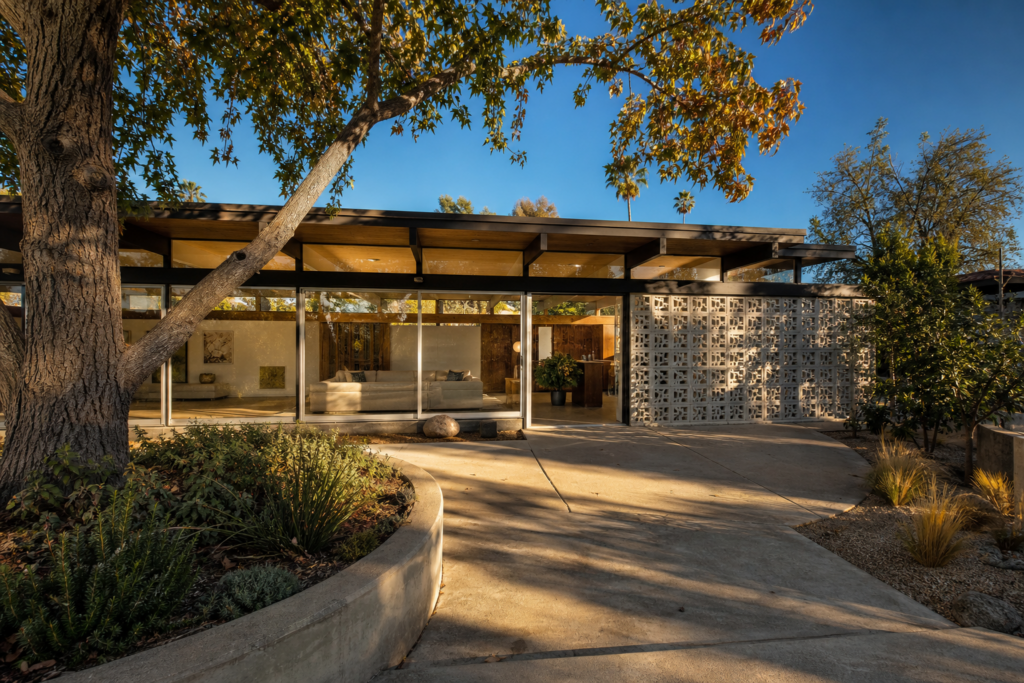
The San Fernando Valley holds one of Southern California’s richest collections of postwar residential architecture, from mid-century modern tracts in Reseda to the only Eichler community in Los Angeles County just minutes from Porter Ranch in Granada Hills.
Why This Matters Right Now for Porter Ranch Buyers and Sellers
If you live in Porter Ranch or you are considering buying here, understanding the architectural DNA of the surrounding Valley neighborhoods gives you something most buyers never get: context. Porter Ranch is a master-planned hillside community defined by newer construction, guard-gated enclaves, and Toll Brothers developments climbing the ridgeline off Mason and Sesnon. That is its strength. But the neighborhoods just minutes south and east tell a completely different story, one written in post-and-beam construction, butterfly rooflines, and decorative concrete block screens.
I have spent over 21 years working the San Fernando Valley, with more than 500 closed transactions across Porter Ranch, Granada Hills, Chatsworth, Northridge, Encino, Sherman Oaks, and Woodland Hills. That kind of sustained experience across multiple neighborhoods means I see the contrast between newer master-planned communities and older architecturally rich pockets every single week. And that contrast matters, because it shapes how buyers evaluate value, how sellers position their homes, and how the market prices character versus convenience.
So where exactly is the architecture, and what should you know about it? Let me walk you through it pocket by pocket.
The Mid-Century Modern Neighborhoods You Can Reach from Porter Ranch in 20 Minutes
Here is something that surprises even longtime Valley residents: the San Fernando Valley is where modernism actually got built at scale. The Hollywood Hills got the magazine covers. The Valley got the actual buildings. And sixty years later, a surprising amount of it is still standing.
Studio City has more architect-designed midcentury houses per square mile than anywhere else north of the hill. The studios were nearby, the people who worked at them wanted to live close, and the hillsides above Ventura Boulevard gave architects slopes to work with. Gregory Ain built here. R. M. Schindler designed the Roxy Roth House. James De Long built the Hackett House in 1962. There is a 1961 USC case study home in the hills. The Basin Residence at 3522 Wrightwood Court, built in 1959, is Historic-Cultural Monument No. 1303, designed by Benton and Park and restored rather than remodeled.
Encino and Sherman Oaks offer a different flavor. South of Ventura, where the ground rises, the houses stop being tracts and start being commissions. These are neighborhoods where a Valley family with money hired an architect instead of buying a model. The surviving examples are one-offs. The Strawberry House at 17061 Strawberry Drive in Encino, a 1964 glass pavilion by Benton and Park, traded in 2025 at $987 per square foot, which tells you exactly what the market pays for an intact architectural home.
What does this mean for you if you are based in Porter Ranch? It means serious architectural character is a short drive away, and it means buyers evaluating Porter Ranch’s newer construction often compare it directly against these older neighborhoods. With Porter Ranch’s median sale price sitting at approximately $1,262,000 as of mid-2026, per local MLS data, and a price per square foot around $526, you are getting nearly double the living space compared to Westside neighborhoods charging $800 to $1,500 per square foot. That math matters.
Granada Hills: The Eichler Tract Next Door to Porter Ranch
This is the section I find myself discussing with clients more than almost any other, because Granada Hills sits immediately adjacent to Porter Ranch and holds one of the most significant architectural assets in the entire Valley.
Balboa Highlands is the only Eichler tract in Los Angeles County. That is not an exaggeration; there is literally no other. It consists of 108 houses built between 1962 and 1964 on four streets off Balboa Boulevard: Darla Avenue, Lisette Street, Nanette Street, and Jimeno Avenue. The three flat-roofed models are Claude Oakland’s designs. The slant-roofed model is also Oakland’s, with some Jones and Emmons collaboration. The A-frame, the one everyone photographs, is the Jones and Emmons model.
Here is the detail that matters if you are thinking about buying: Balboa Highlands became a Historic Preservation Overlay Zone under Ordinance 181,088, adopted February 12, 2010, making it the first postwar neighborhood in the San Fernando Valley to receive that designation. Contributing status is what makes a house here eligible for the Mills Act, and that matters more to an owner’s property tax bill than any plaque does.
What I tell my clients is this: if you love the idea of architectural character but you also want the schools, amenities, and lifestyle that come with the northwest Valley, Granada Hills gives you a rare combination. And if you ultimately decide that newer construction suits your family better, Porter Ranch is right there, with entry-level resale homes below Rinaldi Street trading in the $900,000s to low $1 millions and luxury estates in Westcliffe and Hillcrest reaching $2.7 million and beyond.
Woodland Hills and Reseda: Where Tract Modernism Still Reads as Designed
Woodland Hills is where the Valley’s tract modernism is most intact. Corbin Palms is Palmer and Krisel, the same partnership that built most of what people photograph in Palm Springs. Woodland West is Charles Du Bois, the Polynesian-inflected builder modern that people now call the A-frame look. Both tracts still read as designed, which is genuinely rare. The neighborhood also holds the Van Dekker House, an R. M. Schindler design (Historic-Cultural Monument No. 974) that survives on acreage most people assume was subdivided decades ago.
Reseda is the neighborhood most often written off and least deserving of it. Edward Fickett, who built more Southern California houses than almost any architect of his generation, worked here at Meadowlark Park. Palmer and Krisel worked here too, at Yolanda Gardens. Two significant postwar partnerships in one flat, unglamorous neighborhood. As the research notes, the pricing does not reflect it yet. If you want the architecture without the architecture premium, Reseda is where it currently lives.
Having closed over 500 transactions across the San Fernando Valley, I can tell you that the tension between “character” and “convenience” is the single most common conversation I have with buyers. Some families tour a Reseda Fickett and fall in love with the lines, the terrazzo, the clerestory windows. Others tour the same house and decide that what they really want is the newer finishes and guard-gated security of Upper Porter Ranch. Neither answer is wrong. But you need to see both before you can make a confident decision.
How Porter Ranch’s Newer Construction Compares to Older Valley Architecture
Porter Ranch itself was built in phases. Shapell developed Porter Ranch Estates and the Mediterranean tracts along Sesnon Boulevard in the late 1980s and 1990s. Renaissance, Sorrento, and Avila followed in the 2000s. Then Toll Brothers arrived from 2015 onward with Canyon Oaks, Hillcrest, and Westcliffe, the highest and newest sections built off Mason and Sesnon.
The architectural vocabulary here is different from the older neighborhoods. You are looking at Modern Traditional and Spanish-influenced designs with tile roofs, stucco siding, and open floor plans engineered for today’s families. Toll Brothers’ Bella Vista Ridge Collection was still selling its final phase in summer 2026 from roughly $2.7 million, per builder data.
Working these Toll Brothers communities has been a core part of my business. I have guided clients through lot selection, upgrade negotiations, structural options, and closing strategy in Westcliffe’s Summit and Skyline collections, Hillcrest’s Highlands, Ridge, Beacon, and Overlook, and The Canyons’ Peak Collection. The best view streets, Sesnon Boulevard, Mason above Sesnon, and the ridge inside Westcliffe, command premiums because city-lights and canyon views add measurable value.
What I want you to understand is this: Porter Ranch represents one end of the Valley’s architectural timeline. The mid-century tracts in Granada Hills, Woodland Hills, and Reseda represent the other. Both have real value. The question is which kind of value matters most to your family.
Historic Landmarks That Anchor the Valley’s Architectural Story
The City of Los Angeles has designated Historic-Cultural Monuments across the entire Valley, and knowing where they are gives you a richer sense of what you are buying into:
- HCM No. 1: Leonis Adobe (1840s), a Monterey-style adobe in the Calabasas and Woodland Hills area, now operated as a museum
- HCM No. 7: Romulo Pico Adobe (1834) in Mission Hills, the oldest residence in the San Fernando Valley
- HCM No. 228: Laurelwood Apartments in Studio City, designed by Rudolph Schindler, built in 1948
- HCM No. 974: Van Dekker House in Woodland Hills, a modern 1940 house designed by Rudolph Schindler
- HCM No. 952: Kaye Residence in Tarzana, designed by Gregory Ain, built 1963
- HCM No. 1303: Basin Residence in Studio City, designed by Benton and Park, built 1959
These are not just plaques on walls. They represent the layers of history that give the Valley its identity and that contribute to property values in the surrounding blocks.
Frequently Asked Questions
What architectural styles define older San Fernando Valley neighborhoods near Porter Ranch?
The dominant styles include California Ranch, mid-century modern (post-and-beam, butterfly roofs, clerestory windows), Craftsman bungalows, and “birdhouse ranch” homes with playful cupolas and cottage-like roofs. Thousands were built across Encino, Burbank, Studio City, North Hollywood, Sherman Oaks, and surrounding areas during the postwar building boom.
Where is the only Eichler tract in Los Angeles County?
Balboa Highlands in Granada Hills, immediately adjacent to Porter Ranch. It consists of 108 homes on four streets off Balboa Boulevard, built between 1962 and 1964, and became a Historic Preservation Overlay Zone under Ordinance 181,088 adopted February 12, 2010.
How does Porter Ranch’s housing stock differ from older Valley neighborhoods?
Porter Ranch is primarily newer construction from the 1980s through 2020s, featuring Modern Traditional and Spanish-influenced designs with tile roofs and stucco. Older neighborhoods feature postwar ranch homes, mid-century modern tracts by architects like Palmer and Krisel, and one-off commissions by Schindler, Ain, and Fickett.
What is the median home price in Porter Ranch as of 2026?
The median sale price in Porter Ranch as of mid-2026 is approximately $1,262,000, with year-over-year appreciation of 3.3% and a median of 22 days on market, per local MLS data.
Are mid-century modern homes in the San Fernando Valley a good investment?
They can be. Intact examples by recognized architects command significant premiums. The Strawberry House in Encino traded in 2025 at $987 per square foot. However, renovation costs for maintaining original architectural details can be substantial, so due diligence is essential.
What is the Mills Act, and does it apply to Valley homes?
The Mills Act provides property tax relief for owners of designated historic properties who agree to maintain and preserve the structure. Homes with contributing status in areas like Balboa Highlands in Granada Hills are eligible, making it a meaningful financial incentive.
Which San Fernando Valley neighborhood has the most architect-designed homes?
Studio City has more architect-designed midcentury houses per square mile than anywhere else north of the Hollywood Hills, per Valley architectural historians. Gregory Ain, R. M. Schindler, and James De Long all built there.
Is Reseda a good area for finding undervalued architectural homes?
Reseda holds tracts by Edward Fickett (Meadowlark Park) and Palmer and Krisel (Yolanda Gardens), two of the most significant postwar partnerships in Southern California. The pricing has not yet caught up to the architectural significance, making it one of the Valley’s best-kept secrets for architecture-focused buyers.
What should I look for when evaluating an older Valley home?
Focus on whether the original architectural details are intact: terrazzo floors, clerestory windows, post-and-beam framing, and original cabinetry. Homes that were restored rather than remodeled tend to hold their value better and qualify more readily for historic designations.
Can I live in Porter Ranch and still enjoy the Valley’s architectural history?
Absolutely. Granada Hills is adjacent, Woodland Hills and Reseda are a short drive via the 118, and Studio City, Encino, and Sherman Oaks are all within 20 to 40 minutes. Porter Ranch gives you the newer construction and amenities while keeping the Valley’s architectural treasures within easy reach.
The Bottom Line
The San Fernando Valley’s architectural character is not some abstract historical footnote. It is a living, evolving factor in how neighborhoods are valued, how buyers compare options, and how the market positions itself over time. Whether you are drawn to the postwar modernism of Reseda and Woodland Hills, the singular Eichler legacy of Granada Hills, or the master-planned luxury of Upper Porter Ranch along Sesnon and Mason, understanding these layers makes you a more informed buyer or seller.
I have spent my career helping clients across Porter Ranch and the broader San Fernando Valley make decisions grounded in real knowledge, not guesswork. With 103 five-star reviews and a track record rated 5.0 out of 5.0 by past clients, I take pride in giving you the kind of honest, strategy-driven guidance that makes complex decisions feel straightforward. If you are ready to explore what the Valley has to offer, whether that is a Toll Brothers estate or a mid-century gem, call me at 818-396-3311. I am Scott Himelstein with the Scott Himelstein Group at Park Regency Realty, and this is the market I know best.
Work with Scott