

Comparing Older Homes and Newer Developments in Granada Hills
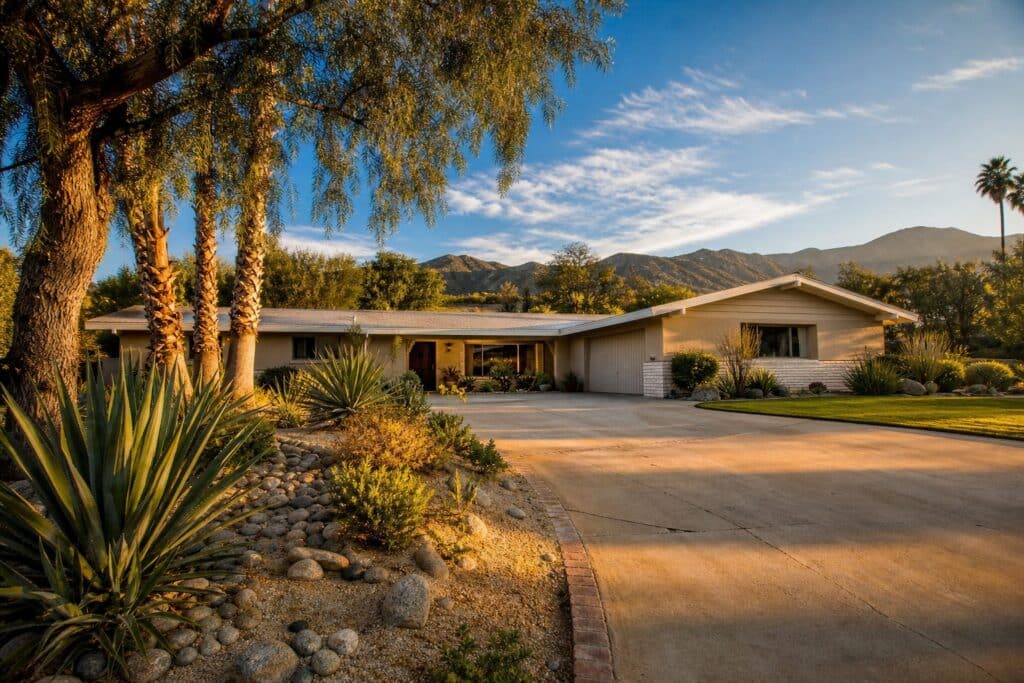
Should you buy an older home or a newer development in Granada Hills?
It depends on your priorities. Older Granada Hills homes offer larger lots and mid-century character, while newer or renovated properties deliver modern systems and move-in convenience, each at very different price points.
Why This Matters Right Now in Granada Hills
Granada Hills is experiencing a genuine market bifurcation in 2026, and it directly affects your buying strategy. As of September 2026, the median sold price across 268 tracked closings sits at $1,000,000, per Resideline data. But that single number hides a massive spread. Older 1950s to 1970s tract homes in Granada Hills South are trading between $850K and $925K, per CRMLS data, while Knollwood luxury hillside homes command $1.6M to $2.2M.
Here is what makes this decision so urgent right now: move-in-ready homes are clearing in 14 to 22 days, while homes needing significant work sit 45 to 60+ days, according to CRMLS data. That gap tells you everything. You are not just choosing between old charm and new finishes. You are choosing between two completely different buying experiences, timelines, and negotiating positions.
Having closed over 500 transactions across the San Fernando Valley over 21+ years, I have watched this bifurcation deepen. And because Porter Ranch neighborhoods have diverse housing options, directly east of Granada Hills, has been one of the core markets I have built my business in, I understand how each pocket of both communities behaves at every price point.
What Older Granada Hills Homes Actually Offer You
The vast majority of Granada Hills housing stock is 55 to 71 years old, according to Altos Research data from August 2026. These are not teardowns. They are the soul of the neighborhood: ranch-style homes built between the late 1950s and early 1970s, sitting on generous lots that newer developments simply cannot match.
What does that look like in practice? The bottom quartile of the market (median $912,450, per Altos Research, August 2026) features homes averaging 1,527 square feet with 3 bedrooms and 2 bathrooms, built around 1955, on lots of 6,500 to 8,000 square feet. Move up to the lower-mid quartile ($1,075,000 median) and you find 4-bedroom, 2-bathroom homes of approximately 1,832 square feet on lots of 8,000 to 10,000 square feet, built around 1959.
What I tell my clients is this: the lot is the asset you cannot replicate. Granada Hills’ average lot size of 8,400 square feet, per CRMLS data, dramatically outpaces the 5,800-square-foot average in neighboring Porter Ranch. That extra space translates into ADU potential, room for a pool, backyard entertaining areas, and long-term flexibility that smaller new-construction lots simply do not provide.
The architectural character is another draw. Granada Hills features the Balboa Highlands neighborhood with mid-century modern homes designed by Joseph Eichler, a design niche that commands premium pricing and attracts passionate buyers. Beyond the Eichlers, you will find Mediterranean, Spanish, Craftsman, and classic tract-style homes throughout the neighborhood.
But older homes come with real costs. Original plumbing, electrical, and HVAC systems may need $30K to $80K or more in replacement work. Pre-1978 homes carry potential asbestos, lead paint, and outdated insulation concerns. Today’s buyers are doing real inspections and negotiating real credits, and sellers need to price accordingly.
How Newer and Renovated Granada Hills Homes Compare
Because Granada Hills is largely built out, “newer developments” here primarily means extensively renovated properties, custom builds on hillside lots, and ADU-equipped homes rather than large master-planned communities like you would find in Porter Ranch.
The upper-mid quartile of the market (median $1,249,990, per Altos Research, August 2026) gives you updated 4-bedroom, 3-bathroom homes averaging 2,383 square feet, while the top quartile ($1,600,000 median) delivers 5-bedroom, 4-bathroom properties averaging 2,950 square feet on quarter-acre to half-acre lots.
So what are you paying for? Energy-efficient systems, including solar-ready construction, dual-pane windows, and modern HVAC. Open floor plans. Current seismic and energy code compliance. And significantly lower immediate maintenance costs.
The trade-off is clear: you pay a higher price per square foot. The median sold price per square foot in Granada Hills reached $596 in August 2026, per Resideline data, and fully renovated homes command even more. But you also gain speed. Move-in-ready product consistently sells in 14 to 22 days, meaning competition is fierce and you need to act decisively.
One category worth your attention is ADU-equipped single-family homes. According to CRMLS and CoreLogic data, ADU-equipped properties in Granada Hills show a median price of $1,180,000 with 9.3% two-year appreciation, the highest of any property type, driven by California’s ADU legislation and strong rental demand of $2,200 to $2,800 per month.
The Real Cost Question: Buy Older and Renovate or Buy Move-In Ready in Granada Hills
This is the question I get most often from buyers exploring Granada Hills. Let me lay out what the numbers actually say.
The price gap between dated and updated homes is significant. Older, original-condition homes cluster around $850K to $925K in Granada Hills South, per CRMLS data. Updated, move-in-ready homes in similar locations push past $1.05M. That roughly $200K gap is your renovation budget, and the question is whether $200K gets you the renovation you actually want.
Here is where it gets nuanced. If you are buying a 1960s ranch with an original kitchen, old HVAC, original windows, and galvanized plumbing, you are looking at a comprehensive renovation that can easily reach or exceed that $200K spread. But if the home has good bones, a newer roof, and updated electrical, a targeted kitchen and bathroom renovation for $80K to $120K can deliver enormous equity.
What matters more than the raw numbers is your timeline and risk tolerance. If you need to be settled before the school year starts, chasing a fixer in a market where dated homes sit 45 to 60+ days gives you more time to negotiate but also means months of construction after closing. If you can absorb the disruption, the larger lot and lower entry price of an older home can be the smarter long-term play, especially when you factor in ADU potential.
With 103 client reviews and a 5.0 out of 5 average rating, the feedback I consistently receive is that buyers appreciate having someone break down these real numbers rather than relying on assumptions. Every pocket of Granada Hills behaves differently, and a home near O’Melveny Park appreciates on a different trajectory (7.2% according to CRMLS data) than one along the Balboa and Chatsworth Boulevard corridor (15% volume growth, per CRMLS data).
Granada Hills Micro-Zones: Where Older and Newer Homes Concentrate
Not every block of Granada Hills is the same, and understanding the micro-zones is essential for your decision.
Knollwood and the Hillside Streets
The custom homes above Balboa Boulevard, particularly toward Knollwood Country Club and Sesnon Boulevard, represent the highest price tier at $1.6M to $2.2M, per CRMLS data. These are larger, often extensively renovated or custom-built, with wide driveways, big setbacks, and sweeping views of the Santa Susana Mountains. If you want newer construction quality with established neighborhood prestige, this is your zone.
Granada Hills South (The Tract Core)
The area south of Rinaldi and closer to Devonshire Street is where the classic 1950s to 1970s ranch homes dominate. Single-story layouts on flat lots are particularly active here, with multiple offers common when priced correctly. This is where you will find the most renovation opportunities, the largest lots relative to price, and a distinctly charming mid-century feel with mature landscaping.
O’Melveny Park Adjacent
This zone shows the strongest appreciation trend at 7.2%, per CRMLS data, driven by remote-work buyers seeking nature access. O’Melveny Park is a 672-acre regional park, the second largest in Los Angeles, and proximity to its hiking trails creates a measurable price premium.
The Chatsworth and Balboa Commercial Corridors
Properties near the commercial stretches along Chatsworth Street and Balboa Boulevard, where Granada Village anchors the local shopping scene, are seeing the fastest volume growth at 15%, per CRMLS data, as corridor improvements attract new buyer interest.
Schools, Lifestyle, and What Actually Drives Value in Granada Hills
You cannot compare homes in Granada Hills without talking about schools. According to Niche data, Granada Hills Charter holds an A+ overall grade and is ranked the number one Best Charter Elementary School in California, number one Best Charter Middle School in California, and number one Best Public K-12 School in California. Per C.A.R. data, the charter school corridor reputation drives 28% of buyer decisions, and the Granada Hills Charter premium translates to approximately $110,000 to $140,000 on a median-priced home, according to CRMLS data.
What does this mean for your older-versus-newer decision? Both categories of homes benefit from this school premium equally, so your choice should focus on the home itself, not school access.
Beyond schools, Granada Hills offers Odyssey Restaurant for upscale hilltop dining with panoramic Valley views, Numero Uno Pizza for neighborhood loyalty, Lulu Bee Haven for brunch, and Sushi Bar Hayama. The Granada Hills Chamber of Commerce, founded in 1928, anchors Old Granada Hills on Chatsworth Street, a reminder that this community’s organized civic identity spans nearly a century.
Frequently Asked Questions
Is it cheaper to buy an older Granada Hills home and renovate it?
Not always. The price gap between dated homes ($850K to $925K in Granada Hills South, per CRMLS data) and updated homes ($1.05M+) is roughly $200K. Comprehensive renovations addressing plumbing, electrical, HVAC, kitchen, and bathrooms can meet or exceed that gap. Targeted renovations on homes with good bones often deliver better value.
How old are most homes in Granada Hills?
The vast majority of Granada Hills homes are 55 to 71 years old, per Altos Research data from August 2026. The core building period was the late 1950s through the early 1970s, with ranch-style architecture predominating throughout the neighborhood.
What is the median home price in Granada Hills in 2026?
As of September 2026, the median sold price is $1,000,000 across 268 tracked closings, per Resideline data. The middle half of sales closed between $849,999 and $1,190,000. Prices vary dramatically by micro-zone and home condition.
How fast do homes sell in Granada Hills?
Move-in-ready homes clear in 14 to 22 days, per CRMLS data. Homes needing significant work or priced above their condition sit 45 to 60+ days. This bifurcation is the defining market feature of 2026.
Are Granada Hills lots bigger than Porter Ranch lots?
Yes. Granada Hills homes average 8,400 square feet of lot size compared to 5,800 square feet in Porter Ranch, per CRMLS data. This is a primary advantage of older Granada Hills homes, especially for ADU construction and outdoor living.
What is the Granada Hills Charter school premium on home prices?
According to CRMLS data, the Granada Hills Charter premium translates to approximately $110,000 to $140,000 on a median-priced home. Per C.A.R. data, the school corridor reputation drives 28% of buyer decisions.
Do ADU-equipped homes appreciate faster in Granada Hills?
Yes. ADU-equipped single-family homes show 9.3% two-year appreciation, per CRMLS and CoreLogic data, the highest of any property type in Granada Hills. Monthly rental demand for ADUs ranges from $2,200 to $2,800.
How does Granada Hills pricing compare to Porter Ranch?
Granada Hills’ median of $945,000 (per CRMLS data for standard single-family homes) is roughly 20% below Porter Ranch’s $1,180,000, with larger average lot sizes and more established neighborhood character.
What neighborhood zone in Granada Hills is appreciating fastest?
The O’Melveny Park adjacent zone shows the strongest appreciation at 7.2%, per CRMLS data, driven by remote-work buyers valuing nature access. The Balboa and Chatsworth corridor shows the fastest volume growth at 15%.
When is the best time to list or buy in Granada Hills?
Per CRMLS data, properties listed in April through May sell for an average 3.2% more than those listed in October through November, and 15 days faster. This aligns with family buyer search timelines.
The Bottom Line
Choosing between an older home and a newer or renovated property in Granada Hills comes down to what you value most: lot size, character, and renovation potential on one side; modern systems, immediate livability, and lower maintenance on the other. Both paths lead to a neighborhood with exceptional schools, mountain views, and a community feel that is genuinely hard to replicate elsewhere in Los Angeles.
As someone ranked in the top 1% of REALTORS in Los Angeles with over 21 years of experience and 500+ closed transactions, my role is to help you understand exactly how each pocket of Granada Hills behaves so you make the right call. My deep experience in Porter Ranch, where I have guided buyers through everything from new construction with builders like Toll Brothers to luxury resale properties, gives me a unique perspective on how these two corridors compare at every price point. If you are weighing your options in Granada Hills or anywhere in the northern San Fernando Valley, I would welcome the conversation. Reach out to me, Scott Himelstein, at 818-396-3311 or visit ScottWorks4u.com. Let’s find the right home for you.
Work with Scott