

Granada Hills vs. Porter Ranch: Housing, Layout, and Daily Convenience Compared
What are the real differences between Granada Hills and Porter Ranch when it comes to housing, neighborhood layout, and daily convenience?
Granada Hills offers larger lots, older character homes, and a lower median price point near $1,000,000, while Porter Ranch delivers newer master-planned construction, HOA-governed consistency, and a median closer to $1,212,500 as of 2026.
Why This Matters for San Fernando Valley Buyers Right Now
If you’re actively shopping in the northwest San Fernando Valley, you’ve probably noticed that Granada Hills and Porter Ranch sit right next to each other, share some of the same schools, and yet feel like completely different neighborhoods. That’s because they are.
I’ve spent over 21 years and more than 500 closed transactions working these communities, and the question I get most often is some version of: “Should I buy in Granada Hills or just stretch into Porter Ranch?” The answer depends entirely on what you value. Not what sounds better on paper, but what actually matches how you want to live day to day. Porter Ranch has been one of the core markets I’ve built my business in, and I understand how each pocket behaves, what drives demand, and how pricing shifts at different price points. Let me walk you through the honest comparison so you can make a confident decision.
Housing Stock in Granada Hills vs. Porter Ranch: Age, Size, and What You Get
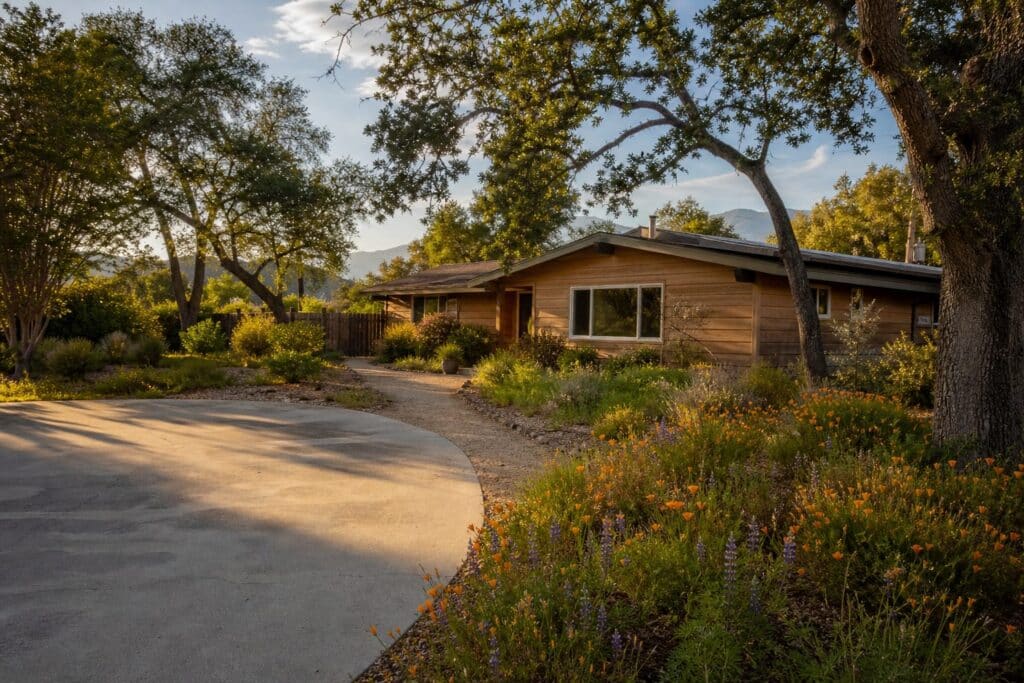
This is where the two neighborhoods diverge most sharply. Granada Hills was largely built out between the late 1950s and early 1970s. You’re looking at ranch-style single-family homes, typically 3 to 4 bedrooms, running 1,400 to 2,200 square feet, sitting on lots that range from 6,000 to over 10,000 square feet. Some pockets feature mid-century modern gems, including homes designed by Joseph Eichler, alongside Mediterranean, Spanish, and Craftsman styles. The housing stock is eclectic, and that’s part of the appeal.
Porter Ranch, by contrast, is mostly newer master-planned construction from the 1990s through the 2010s. Homes in the newer tracts typically run 2,800 to 4,000 square feet or more, with consistent tract layouts, attached two- and three-car garages, and modern floor plans. The three most prominent gated communities are Westcliffe (known for views and modern finishes), Renaissance (multi-generational layouts and clubhouse amenities), and Bella Vista (most affordable HOA with ADU-friendly lots).
So what does the price difference actually look like?
- Granada Hills median sold price: $1,000,000 across 268 closings in the last six months, per Resideline Market Watch as of September 2026
- Porter Ranch median sold price: $1,212,500 across 242 closings in the same period, per Resideline Market Watch as of October 2026
- Granada Hills average lot size: approximately 8,400 square feet (0.20 to 0.35 acres)
- Porter Ranch average lot size: approximately 5,800 square feet (0.10 to 0.20 acres)
You read that correctly. You get more land in Granada Hills for roughly 20% less money. But Porter Ranch gives you newer systems, modern finishes, and consistent street presentation. What matters more to you?
Neighborhood Layout and HOA Differences in Granada Hills and Porter Ranch
Granada Hills is mostly HOA-free outside a few pockets. That means you get the freedom to renovate, add an ADU on many lots, and customize your property however you see fit. The trade-off? The house across the street may be renovated to a completely different standard than yours. The equestrian zones in northern Granada Hills add another layer of character that Porter Ranch simply does not have.
Porter Ranch’s master-planned layout means HOA governance is the norm. Most developments include shared parks, clubhouses, and well-maintained common areas. Family-friendly infrastructure is consistent across the community. Mello-Roos is common in Porter Ranch’s newer tracts but rare in Granada Hills, and that’s a recurring cost many buyers underestimate.
Granada Hills’ Three Distinct Pockets
You’re not buying “Granada Hills” as one market. It’s actually three:
- Granada Hills South (Chatsworth Street Corridor): Entry-level single-family homes from the 1950s through 1970s, priced roughly $850K to $925K. This is the walkable core, anchored by the Granada Hills Recreation Center at 16730 Chatsworth Street and the weekly Granada Hills Farmers Market.
- Granada Hills North (Sesnon Boulevard / O’Melveny area): Larger lots, proximity to O’Melveny Park’s 672 acres of open space, priced $975K to $1.2M. Sesnon Boulevard addresses carry premium cachet.
- Knollwood (hillside estates): Luxury tier with sweeping Valley views, Knollwood Country Club access, and prices ranging from $1.6M to $2.2M.
Understanding these micro-pockets is everything. When buyers tell me they want “Granada Hills,” I always ask which Granada Hills.
Schools in Granada Hills and Porter Ranch: What Families Need to Know
Both neighborhoods draw from LAUSD, and both have strong options. Here’s where it gets interesting.
Granada Hills Charter High School, located at 10535 Zelzah Avenue, is ranked among LA’s top 10 public high schools by U.S. News & World Report. According to local market analysis, the school premium translates to approximately $110,000 to $140,000 on a median-priced home, making school quality the number one amenity influencing purchase decisions for family buyers. The neighborhood also has fourteen public schools and ten private options.
Porter Ranch public schools carry an average ranking of 10 out of 10, placing them in the top 5% of all California public schools, per local education data. Porter Ranch Community School (K-8, at 12450 Mason Avenue) anchors the neighborhood with 1,312 students, 81% reading proficiency, and 73% math proficiency. Sierra Canyon School holds an A+ Niche grade with roughly 1,916 students and a 15:1 student-teacher ratio, making it one of the most prestigious private campuses in the greater Valley.
Here’s the detail that surprises most people: Porter Ranch Estates is actually zoned for Granada Hills Charter High School. So some Porter Ranch residents benefit from that top-tier school without paying the Granada Hills median price. This zoning overlap is exactly the kind of nuance that only comes from working these communities consistently.
Daily Convenience, Shopping, and Green Space in Both Neighborhoods
Your daily routine will feel different depending on which side of Rinaldi Street you land on.
Porter Ranch is closer to the 118 Freeway and features the Vineyards at Porter Ranch as its lifestyle hub, with restaurants like Salina, La Popular, Finney’s Crafthouse, and Lure Fish House, along with a movie theater and fitness centers. Porter Ranch Town Center adds everyday retail including Whole Foods Market. The experience is newer and more curated.
Granada Hills has Chatsworth Street’s older commercial spine. It’s less polished and, depending on your taste, considerably more interesting. You’ll find family-run Mexican and Italian spots alongside Mediterranean and Armenian eateries. Lulu Bee Haven draws the morning crowd. Odyssey Restaurant offers upscale hilltop dining with panoramic Valley views. Numero Uno Pizza has a loyal following that spans decades.
For green space, the comparison is dramatic:
- Granada Hills: O’Melveny Park delivers 672 acres of hiking trails and wildflower blooms in spring, making it the second-largest park in all of Los Angeles. The main loop trail runs about 3.5 miles. Zelzah Park adds a bridle path and play areas.
- Porter Ranch: The 50-acre Boeckmann Park at 11930 N Mason Avenue features a shaded playground, pickleball and basketball courts, a splash park, and an outdoor amphitheater. Limekiln Canyon Park and Aliso Canyon Park provide canyon trail access. Porter Valley Country Club offers an 18-hole championship golf course.
Granada Hills’ southern half is also modestly closer to the 405, which matters more than people expect for daily commuting.
Cost of Ownership: What Granada Hills and Porter Ranch Actually Cost Monthly
Beyond the purchase price, your monthly carrying cost differs between these two neighborhoods.
Granada Hills’ effective property tax rate runs about 1.25% of purchase price (LA County), which translates to approximately $12,688 per year on the median home. Utilities run $230 to $340 per month covering LADWP electric, SoCalGas, and water, according to local cost-of-living data. A typical four-bedroom home with 20% down in Granada Hills runs $7,200 to $8,800 per month in total housing cost.
Porter Ranch adds HOA dues and frequently Mello-Roos on top of similar tax rates. A $1,850,000 purchase with $466,000 down would finance roughly $1,384,000, likely in jumbo loan territory. Factor in property taxes at 1.1% to 1.25%, homeowners insurance, HOA fees, and any Mello-Roos assessments, and your monthly obligation climbs meaningfully.
One thing I always emphasize to my clients: insurance is now doing as much to shape monthly cost as the interest rate, particularly for hillside properties in both neighborhoods.
Who Should Choose Granada Hills and Who Fits Better in Porter Ranch
After more than two decades helping buyers navigate this exact decision, I’ll give you the straight answer.
If your priority is a newer home with predictable systems, modern floor plans, and you’re comfortable accepting HOA governance, Porter Ranch is the better fit. Through my work with new construction communities, including developments by builders like Toll Brothers, I’ve guided clients through lot selection, upgrades, negotiations, and closing strategy. I know what that buying process looks like from the inside.
If your priority is land, renovation upside, ADU potential, or getting into the north Valley at a lower entry point, Granada Hills is the better choice. You’ll get more yard per dollar and more architectural variety.
Both markets are currently balanced. Granada Hills shows 33 active listings and a list-to-sale ratio close to 99.1% as of October 2026, per Resideline data. Porter Ranch sits at 38 active listings with the same 99.1% ratio. Neither market gives you much room for lowball offers right now.
Frequently Asked Questions
How much cheaper is Granada Hills than Porter Ranch in 2026?
Granada Hills’ median sold price is $1,000,000 compared to Porter Ranch’s $1,212,500, per Resideline Market Watch data from September and October 2026 respectively. That’s roughly a 20% difference. However, Granada Hills spans a wide spectrum, from $850K tracts in the south to $2.2M estates in Knollwood, so your actual savings depend on which pocket you target.
Are Porter Ranch lots smaller than Granada Hills lots?
Yes. Porter Ranch average lot sizes run approximately 5,800 square feet (0.10 to 0.20 acres), while Granada Hills averages about 8,400 square feet (0.20 to 0.35 acres), according to comparative market data. You get significantly more outdoor space in Granada Hills for less money.
Do both neighborhoods share the same schools?
Both draw from LAUSD, and there’s meaningful overlap. Notably, Porter Ranch Estates is zoned for Granada Hills Charter High School, which is ranked among LA’s top 10 public high schools by U.S. News & World Report. Porter Ranch Community School serves as the K-8 anchor for Porter Ranch with 81% reading proficiency and 73% math proficiency.
Does Porter Ranch have HOA fees and Mello-Roos?
HOA prevalence is high in Porter Ranch and common in its newer tracts. Mello-Roos is also typical in Porter Ranch’s master-planned communities. Granada Hills is mostly HOA-free and Mello-Roos is rare. These recurring costs can add hundreds per month to your Porter Ranch carrying cost beyond the mortgage.
Which neighborhood is better for commuting?
Porter Ranch sits closer to the 118 Freeway, which benefits westbound commuters. Granada Hills’ southern half is modestly closer to the 405, which matters significantly for daily southbound commutes. Your ideal location depends on where you work and which freeway corridor you use most.
What kind of homes will I find in Granada Hills?
Granada Hills housing stock is eclectic, with many mid-century modern homes (some designed by Joseph Eichler), alongside Mediterranean, Spanish, Craftsman, and standard tract homes built primarily from the 1950s through 1970s. Typical homes run 3 to 4 bedrooms and 1,400 to 2,200 square feet.
What are the best parks in Granada Hills and Porter Ranch?
O’Melveny Park in Granada Hills offers 672 acres of hiking trails, making it the second-largest park in Los Angeles. Porter Ranch features the 50-acre Boeckmann Park with a splash park, amphitheater, and sports courts, plus canyon trail access at Limekiln Canyon Park and Aliso Canyon Park.
How fast are homes selling in Granada Hills and Porter Ranch?
Both markets are moving at similar speeds. Granada Hills median days on market is around 20 to 26 days, while Porter Ranch sits at about 22 days. Both carry a list-to-sale ratio close to 99.1%, per Resideline data from mid-2026. Move-in-ready homes in Granada Hills are selling in 14 to 22 days.
Can I build an ADU in Granada Hills more easily than Porter Ranch?
Granada Hills’ larger lots and mostly HOA-free environment make ADU construction more straightforward on many properties. Porter Ranch HOA restrictions and smaller lot sizes can complicate ADU plans, though Bella Vista is noted as more ADU-friendly among Porter Ranch’s gated communities.
Is Granada Hills or Porter Ranch appreciating faster?
They’re tracking closely. Granada Hills prices are up roughly 3.0% year over year as of May 2026, while Porter Ranch is up approximately 3.3% year over year as of June 2026, per Resideline Market Watch data. Neither community is dramatically outpacing the other in the current market cycle.
The Bottom Line
Granada Hills and Porter Ranch sit side by side but serve different buyers. Granada Hills gives you more land, more architectural variety, and a lower entry point, with a neighborhood character that’s earned over decades. Porter Ranch delivers newer construction, consistent presentation, and curated retail amenities at a higher price point. Both markets are balanced, both are appreciating modestly, and both offer access to some of the best schools in the San Fernando Valley.
With over 21 years of experience, 500 closed transactions, and a 5.0 average rating across 103 client reviews, I’ve built deep expertise in both of these communities. Porter Ranch isn’t just another market for me; it’s an area where I’ve built long-term relationships and understand how to get results at every price point. If you’re weighing Granada Hills against Porter Ranch, I’d welcome the conversation. Reach out to me, Scott Himelstein, at 818-396-3311 or visit ScottWorks4u.com to talk through which neighborhood fits your goals.
Work with Scott