

Los Angeles Housing Market 2026: Why Sellers Are Making Price Cuts and Buyers Are Gaining Leverage
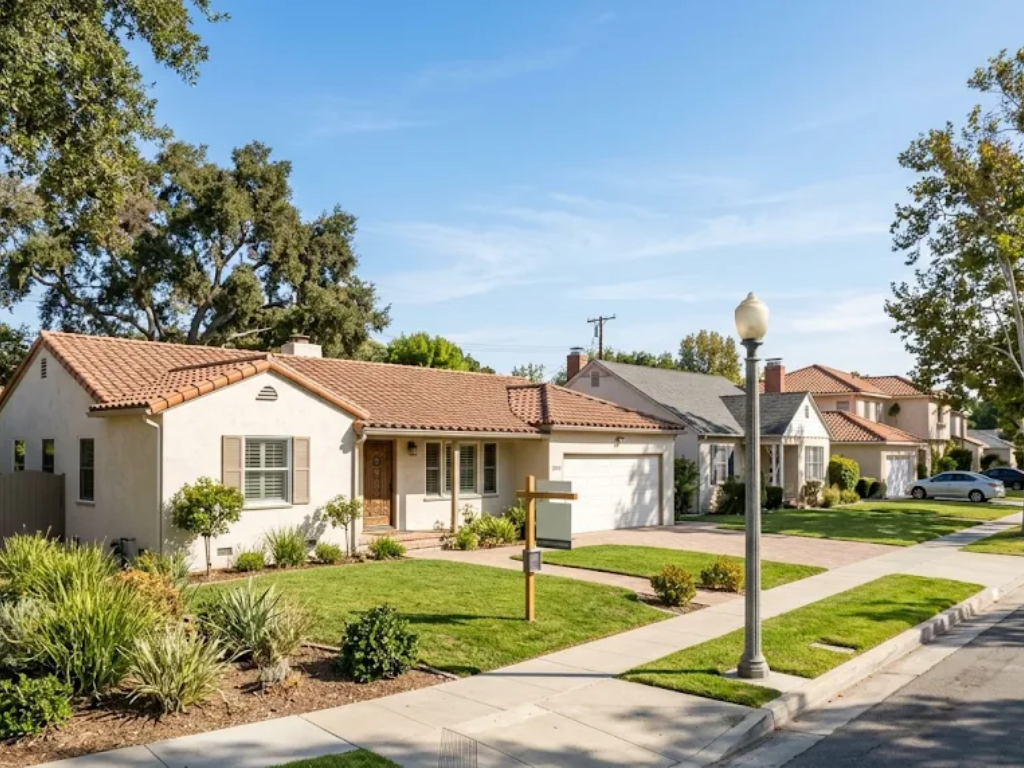
Price reductions, seller concessions, and homes sitting on the market for months are becoming more common across the San Fernando Valley. In neighborhoods such as Porter Ranch, Granada Hills, Northridge, Sherman Oaks, and Woodland Hills, the housing market is showing signs of a significant shift.
According to San Fernando Valley real estate agent Scott Himelstein, sellers are facing a very different environment from the competitive market of 2021 and 2022. Buyers are more cautious, affordability remains a challenge, and properties that are priced too aggressively can struggle to attract attention.
But what is driving this change? And what does it mean if you’re planning to buy or sell a home in Los Angeles?
1. First-Time Buyers Are Being Priced Out of the Market
One of the biggest challenges facing the San Fernando Valley housing market is the affordability gap for first-time buyers.
First-time buyers play an important role in the real estate market. They purchase starter condos and townhomes, allowing current owners to sell those properties and move into larger homes. Those move-up buyers then create opportunities for other sellers.
When first-time buyers cannot afford to enter the market, that entire chain slows down.
Scott points to the cost of starter homes in areas such as Sherman Oaks and Studio City. When a property is priced around $1 million or more, the down payment, property taxes, insurance, and monthly mortgage payment can make ownership difficult for someone just starting their career.
The impact extends beyond single-family homes. Condos and townhomes in communities such as Van Nuys, Reseda, Winnetka, and Canoga Park can also struggle when fewer entry-level buyers are active.
Scott also references the rising average age of first-time homebuyers nationally, which he says has moved closer to 40, compared with approximately 28 three decades ago. This illustrates how affordability challenges are delaying homeownership for many households.
2. Why Some Longtime Homeowners Are Choosing Not to Sell
Another factor affecting available housing inventory is the number of longtime homeowners who are reluctant to sell.
Many homeowners in established Valley neighborhoods purchased their properties during the 1980s and 1990s. A home that originally cost a few hundred thousand dollars may now be worth well over $1 million.
Some of these owners would like to downsize now that their children have moved out. However, selling can create financial complications.
Capital gains taxes
Scott discusses the federal capital gains exclusion for a primary residence, which allows eligible married couples filing jointly to exclude up to $500,000 in qualifying gains when they meet the ownership and use requirements.
For homeowners who purchased decades ago and experienced substantial appreciation, the amount above the exclusion may be subject to capital gains tax.
The exclusion has remained at $500,000 for married couples filing jointly since 1997, despite the substantial increase in home values over the years.
Property taxes and Proposition 13
California’s Proposition 13 also influences homeowners’ decisions.
Longtime owners may have significantly lower assessed property values than someone purchasing a comparable home today. If they sell and buy another property, their property tax situation may change, depending on the circumstances and any applicable transfer provisions.
For some homeowners, the prospect of moving into a smaller property with a substantially higher property tax bill makes downsizing less appealing.
Together, these factors can discourage longtime owners from listing their homes, limiting the availability of properties across different price ranges.
3. Will Lower Mortgage Rates Bring Back the Bidding Wars?
Many buyers and sellers are waiting for mortgage rates to decline. Lower rates could improve affordability and bring more buyers back into the market.
However, Scott does not expect a return to the intense bidding wars experienced during the pandemic simply because rates reach 5.5%.
During COVID, exceptionally low mortgage rates combined with home prices that were substantially lower than today’s levels created unusually strong purchasing power. That combination fueled intense competition.
The current market is different. Even if mortgage rates decline and home prices adjust, buyers would still be facing higher purchase prices than they did during the pandemic.
Scott expects that lower rates could help homes that have been sitting for 60, 90, or 120 days sell more quickly. However, he believes that does not necessarily mean sellers will receive 15 to 30 offers again.
For sellers, this is an important distinction. A rate decrease may improve demand, but it does not guarantee that buyers will overlook an overpriced property.
4. Porter Ranch Sales Are Down, and the Impact Is Visible Across the Valley
Scott highlights a significant decline in home sales in Porter Ranch, reporting that closed sales were down more than 30% year to date at the time of the recording.
He describes similar slowdowns in other parts of the San Fernando Valley.
Lower transaction volume can reflect several conditions:
- Buyers postponing their purchases because of affordability concerns.
- Transactions falling apart during escrow.
- Sellers withdrawing listings when they do not receive acceptable offers.
- Buyers taking more time to compare available properties.
This does not mean that every home is impossible to sell. It means fewer transactions are happening, and buyers are becoming more selective about where they spend their money.
For sellers, the difference between the market of 2022 and the conditions discussed in the recording is especially important when setting an asking price.
5. The Costly Mistake of Making Small Price Reductions
One of Scott’s biggest concerns is the pattern of repeated, small price reductions.
Consider a hypothetical $1.2 million home in Granada Hills or a $1.6 million home in Porter Ranch.
A seller might reduce the asking price by $25,000 after the first 30 days. Another $25,000 reduction follows a month later. Eventually, the seller receives an offer $60,000 below the original asking price.
After several months, the seller may have given up close to $100,000 through a combination of reductions and negotiation.
Scott argues that a more accurate pricing strategy from the beginning could have attracted more serious buyers and potentially created competition.
He also describes seeing six-figure price reductions on larger properties, including custom homes and estates in Porter Ranch and other Valley communities.
The lesson is not that every seller should automatically price below market value. It is that the asking price needs to reflect current buyer expectations and comparable sales, rather than what a neighbor received several years ago.
6. Why Zillow and AI Estimates Should Not Be Your Only Pricing Guide
Online home value estimates and AI tools can provide a starting point for understanding property values. However, Scott warns sellers against relying on these numbers as their only pricing strategy.
An automated estimate may not fully account for:
- The condition and presentation of the property.
- Recent buyer activity in the immediate neighborhood.
- Differences between comparable homes.
- Current competition from other active listings.
- Buyer reactions during showings and open houses.
- Negotiation trends and inspection concerns.
Two homes with similar square footage can attract very different levels of interest because of their location, condition, upgrades, layout, and pricing.
A neighborhood-focused pricing strategy should consider recent comparable sales, active competition, pending transactions, and actual feedback from buyers.
Technology can help with research, but local market knowledge and property-specific analysis remain important.
7. Buyers Have More Leverage When Negotiating Repairs and Credits
The balance of negotiating power has shifted compared with the years when buyers were routinely offering above asking price and waiving contingencies to compete.
Scott explains that buyers today may have more opportunities to negotiate after inspections.
Instead of submitting a long list of individual repair requests, he often recommends asking the seller for a credit at closing when appropriate.
A credit can provide buyers with more flexibility to address repairs after taking ownership, subject to lender approval and the terms of the transaction.
Scott also notes that sellers need to be prepared for buyers to reconsider a purchase if inspection concerns are not resolved. Buyers may have more alternatives available and may be less willing to accept unfavorable terms.
For both parties, the right negotiation strategy depends on the property’s condition, the purchase agreement, financing requirements, and the current level of competition.
8. The San Fernando Valley Is Made Up of Different Micro-Markets
It is easy to talk about the Los Angeles housing market as one large market. However, conditions can vary considerably from one neighborhood to another.
Scott contrasts areas such as Studio City and parts of Sherman Oaks with Porter Ranch and Granada Hills.
He describes well-priced, move-in-ready properties under $2 million in parts of Studio City and Sherman Oaks as continuing to attract buyers more consistently.
Meanwhile, he reports that Porter Ranch and Granada Hills have experienced slower sales, longer days on market, and more frequent price reductions.
These differences demonstrate why buyers and sellers should look beyond broad Los Angeles market headlines.
A property in one neighborhood may attract multiple offers while a similar property in another area sits for several months.
The specific location, price range, property condition, and available inventory all influence the outcome.
9. Two Similar Porter Ranch Homes, Two Very Different Results
Scott shares an example involving two similar properties in Porter Ranch that were listed within a few weeks of each other.
The first seller wanted to price the home 10% to 15% above the recommended asking price, partly because of a high sale their neighbor had achieved two years earlier.
That property remained on the market for nearly two months without generating meaningful interest.
The second seller had already found their next home and wanted to move more quickly. The property was priced accurately, slightly on the aggressive side, based on the recommended strategy.
The result was multiple offers and a sale above the asking price within 12 days.
The comparison illustrates an important point: even in a slower market, buyers are still willing to compete for homes that are priced appropriately and presented well.
The market has not stopped moving. Buyers are simply being more selective.
10. Buyer Opportunities: Inspections, Seller Credits, and Rate Buydowns
For buyers who can comfortably afford a home, a slower market may create opportunities that were harder to find during the pandemic.
Scott points out that buyers may now have more time to evaluate properties and negotiate terms.
Potential opportunities include:
- More thorough inspections: Buyers may have more flexibility to bring in specialists, such as electricians and roofers, when needed.
- Seller credits: Buyers can negotiate financial assistance for eligible closing costs or other permitted expenses.
- Repair negotiations: Inspection findings may provide an opportunity to discuss repairs or adjustments.
- Mortgage rate buydowns: Buyers can ask whether a seller contribution toward a temporary rate buydown is possible.
Scott specifically discusses a 2-1 temporary rate buydown. This type of arrangement generally reduces the buyer’s interest rate by two percentage points in the first year and one percentage point in the second year, before returning to the original note rate in the third year.
The actual savings depend on the loan amount, interest rate, loan structure, and lender terms. Buyers should speak with their mortgage professional to compare a rate buydown with other possible concessions.
11. Is a San Fernando Valley Housing Market Crash Coming?
A major concern for buyers is whether purchasing a home now could mean losing a substantial amount of value over the next few years.
Scott does not expect a widespread 30% price decline across the San Fernando Valley. He describes the Los Angeles market as historically resilient and believes a more moderate, single-digit price adjustment is more likely overall, although higher-priced properties could experience larger corrections.
He also makes an important distinction between home prices and sales volume.
Even if prices experience a relatively modest adjustment, the number of homes selling can decline much more significantly.
That is the type of market condition he describes in the recording: fewer transactions, more negotiation, and sellers adjusting their expectations.
His view is that certain slower-moving neighborhoods are already experiencing a market reset rather than a broad housing collapse.
These are market opinions and projections, not guarantees. Future prices will depend on mortgage rates, employment, inventory, affordability, and broader economic conditions.
12. What Sellers Should Do Differently in 2026
For homeowners considering a sale, Scott’s central recommendation is to price the property accurately from the beginning.
Starting too high and waiting to see what happens can create several problems:
- The property may receive fewer showings.
- Buyers may assume the seller is unrealistic.
- Days on market continue to accumulate.
- Repeated price reductions can weaken negotiating leverage.
- Sellers may eventually accept less than they could have received with a stronger initial strategy.
Scott also encourages sellers to move away from the expectations created by the unusually competitive 2021 and 2022 market.
During those years, some properties received dozens of offers and sold substantially above asking price. Those conditions were exceptional, not necessarily the standard for a healthy housing market.
A successful sale in the current environment requires understanding what buyers are actually responding to in that specific neighborhood and price range.
What This Means for Buyers and Sellers in the San Fernando Valley
The Los Angeles housing market described by Scott is not a market where every property is selling quickly or every seller is receiving their asking price. It is also not a market where buyers have unlimited negotiating power.
The biggest difference is that pricing, preparation, and strategy matter more than ever.
For buyers, this environment may offer more time to evaluate properties, conduct inspections, and negotiate seller concessions.
For sellers, the most important step is understanding current local conditions before deciding on an asking price. Waiting for the market to return to 2022 conditions may not be a reliable plan.
Whether you’re considering a move in Porter Ranch, Granada Hills, Northridge, Sherman Oaks, Woodland Hills, or another San Fernando Valley neighborhood, look closely at the market activity in your specific area.
A well-informed decision starts with current local data, realistic expectations, and a strategy built around your individual goals.
Work with Scott