

Mid-Century Homes in Granada Hills: Features That Make Them Unique
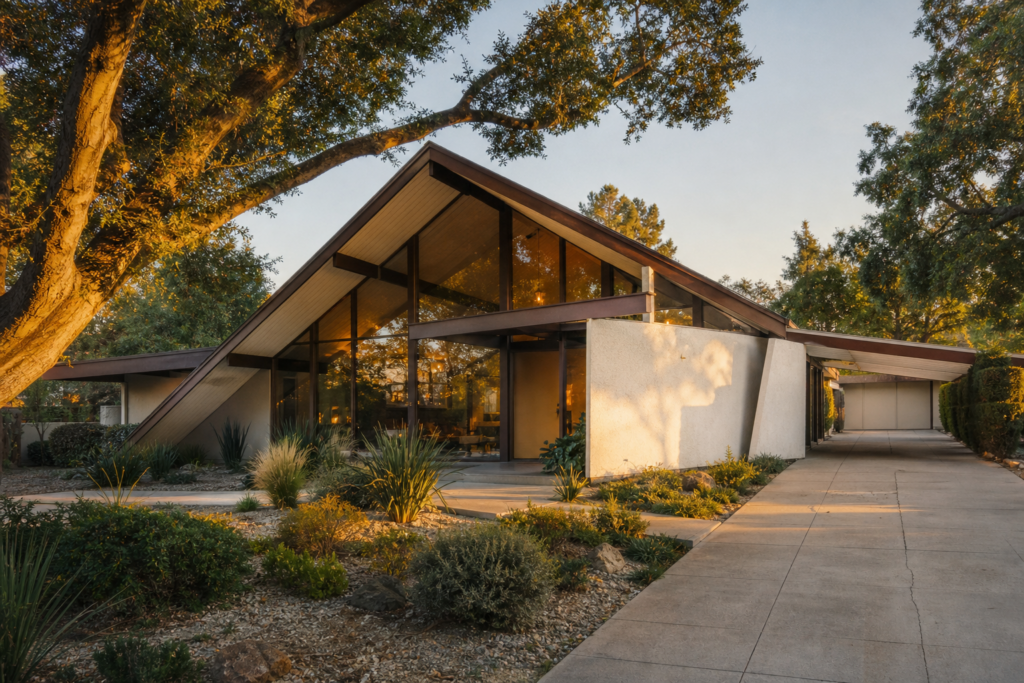
What makes mid-century homes in Granada Hills so architecturally distinctive, and why do buyers continue to seek them out?
Granada Hills holds a concentration of mid-century architecture you simply will not find anywhere else in Los Angeles County, from the only Eichler neighborhood in the county to thousands of Palmer and Krisel designs and even a Richard Neutra original.
Why Granada Hills Mid-Century Homes Matter Right Now
If you are shopping for a mid-century home in the San Fernando Valley in 2026, Granada Hills should be at the top of your list. This is not a matter of opinion. It is a matter of inventory.
Granada Hills contains the largest and most concentrated pocket of Palmer and Krisel tract homes in the city, plus over 100 Joseph Eichler-designed residences in the Balboa Highlands neighborhood, making it the only Eichler development within all of Los Angeles County. That kind of architectural density does not exist in Sherman Oaks, Studio City, or anywhere else in the Valley.
As someone who has spent over 21 years working in the San Fernando Valley with more than 500 closed transactions, I can tell you that buyers who understand what they are looking at in Granada Hills tend to act fast. Per Resideline data, the median closing price in Granada Hills over the last six months is $1,000,000 across 268 tracked closings. Move-in-ready homes are going in 14 to 22 days. The architectural premium on well-preserved mid-century homes is real, and demand continues to tighten against limited supply.
So what exactly makes these homes worth your attention? Let me walk you through it.
Balboa Highlands: Granada Hills’ Crown Jewel of Mid-Century Architecture
You cannot have a conversation about mid-century homes in Granada Hills without starting here. Balboa Highlands was constructed by seminal California developer Joseph Eichler between 1962 and 1964. The tract represents Eichler’s vision of modern architecture for everyone: modest in scale, striking in design, and deeply rooted in the idea that good design should not be reserved for the wealthy.
What makes these homes immediately recognizable is their structure. Eichler collaborated with some of the most important modernist architects of the era, including A. Quincy Jones, Frederick Emmons, and Claude Oakland. These are the same architects whose work now commands seven-figure premiums in the Bay Area, but in Granada Hills, their designs remain accessible by Los Angeles standards.
The Four Models You Will Find in Balboa Highlands
The Balboa Highlands homes generally exhibit four basic models with three roofline types:
- A-frame rooflines, designed by Jones and Emmons, Associates
- Slant-roofed models, designed by Claude Oakland with Jones and Emmons
- Flat-roofed models, designed by Oakland
Each model features post-and-beam construction, open floor plans, and Eichler’s signature central atrium, which serves as the true heart of the home. These atriums bring natural light deep into the interior and create an indoor garden space that connects every wing of the house.
What I tell my clients who are exploring Balboa Highlands is this: the neighborhood’s cohesive design creates a walkable, visually unified streetscape you will not find in any other pocket of LA County. That matters for long-term value.
Palmer and Krisel Designs Throughout Granada Hills
Beyond Balboa Highlands, Granada Hills has thousands of Palmer and Krisel designs scattered throughout the broader neighborhood. These homes were the backbone of postwar suburban development in the San Fernando Valley, and Granada Hills holds the largest concentration.
You will recognize a Palmer and Krisel home by its clean horizontal lines, butterfly or folded-plate rooflines, and an emphasis on glass bringing the outdoors in. Many of these homes sit on generously sized lots that dwarf what you will find elsewhere in the Valley. According to research data, Granada Hills north zone lots average 11,000 to 14,000 square feet, compared to 7,500 to 9,500 square feet in Northridge and 6,000 to 8,000 square feet in Sherman Oaks.
That lot size difference is not trivial. It means room for pools, guest units, and the kind of private outdoor living that mid-century architects intended from the beginning. What is especially notable is that restored Palmer and Krisel homes and Eichler homes command meaningful premiums over standard tract inventory in Granada Hills, according to CRMLS data.
Because Porter Ranch sits right next door and is one of the core markets I have built my business in, I often work with buyers who are comparing the two communities. Porter Ranch offers newer construction and luxury estates, while Granada Hills delivers architectural character and larger legacy lots at a different price point. Understanding how those two markets relate to each other is essential when you are deciding where to buy, and it is exactly the kind of cross-market insight I bring from working both areas consistently.
Signature Features That Define Granada Hills Mid-Century Homes
So what should you actually be looking for when you walk through one of these homes? Here are the hallmarks.
Post-and-Beam Construction and Open Floor Plans
Mid-century homes in Granada Hills were built with exposed structural beams that do double duty as aesthetic elements. This post-and-beam framework eliminates the need for many interior load-bearing walls, giving you flowing, open spaces that feel remarkably modern even 60 years later.
Walls of Glass and Indoor-Outdoor Living
Floor-to-ceiling glass walls are a defining feature. In both Eichler and Palmer and Krisel designs, you will find walls of glass that erase the boundary between interior living space and the backyard. As one Eichler listing in the area describes it, the most outstanding feature is the open-concept living with a center atrium and walls of glass looking out onto a flat, private yard.
Radiant Floor Heating
Many Eichler homes feature radiant floor heating embedded in the concrete slab. It is an elegant, quiet system, though one that buyers need to evaluate carefully, since original radiant systems from the 1960s may need updating.
Distinctive Rooflines
Whether it is the dramatic A-frame pitch, the low-slung slant, or the clean flat roof, these rooflines are what give Granada Hills mid-century streets their unmistakable character.
Natural Material Palettes
You will see combinations of white cement plaster, redwood, and exposed wood beams throughout. These materials create a dialogue between crisp modernist geometry and natural warmth.
The Richard Neutra Connection in Granada Hills
Here is something most buyers do not realize: Granada Hills is home to the Logar House, designed by iconic architect Richard Neutra. Completed between 1950 and 1951, this home was commissioned by James F. and Olive Logar after they were inspired by Neutra’s 1949 Time magazine cover feature. Olive Logar famously described it as “a beautiful little ship at anchor.”
The Logar House is archived in the Getty Research Institute and noted as eligible for Los Angeles Historic Places designation. It may be the last Neutra-designed home in the entire North San Fernando Valley. Its L-shaped design in white cement plaster and redwood, with private terraces extending from each bedroom and living room, embodies Neutra’s philosophy of atmospheric continuity between architecture, landscape, and daily life.
You do not need to buy the Logar House to appreciate what it means for the neighborhood. Its presence confirms that Granada Hills is not just a tract-home suburb. It is a place where master architects chose to build, and that pedigree influences the entire market.
What Mid-Century Homes in Granada Hills Cost in 2026
Pricing in Granada Hills varies significantly based on architectural pedigree, condition, and location. Based on current research data:
- Well-maintained mid-century examples start around $789,000
- Rare William Krisel and Dan Palmer designs list around $925,000
- Mid-century single-story executive homes in North Granada Hills list around $1,198,000
- Iconic architect-designed compounds with pools can reach $1,875,000
The Granada Hills South 1950s to 1970s tracts clock in at $850,000 to $925,000, per hyperlocal data. Pool homes continue to command a premium of $50,000 to $100,000 over comparable non-pool listings.
What does this mean for your budget? It means that Granada Hills is one of the last corners of the San Fernando Valley where you can find an authentic 1950s or 1960s ranch home on a 10,000 to 14,000 square foot lot at prices below $1.2 million. That is genuinely rare in Los Angeles in 2026.
Condition Matters More Than Ever
Today’s market is not as forgiving as it was a few years ago. Homes that are dated but not distressed, think original 1960s kitchens, old HVAC, and original windows, are finding buyers willing to take on the work, but sellers need to price accordingly. Buyers are doing real inspections and negotiating real credits. If you are buying, I strongly recommend budgeting for a thorough pre-purchase inspection focused on galvanized plumbing, sewer lines, and electrical panels, all common issues in homes from this era.
Living in Granada Hills Beyond the Architecture
You are not just buying a house. You are buying into a neighborhood with specific advantages that complement mid-century living.
Granada Hills Charter High School at 10535 Zelzah Avenue holds an A+ Overall Niche Grade and is ranked number one among best charter K-12 schools in California, per Niche. Its proximity is baked directly into home values on surrounding streets, with CRMLS data showing a premium of approximately $110,000 to $140,000 on median-priced homes near the school.
You will also enjoy immediate access to O’Melveny Park off Sesnon Boulevard, Knollwood Country Club on the neighborhood’s western edge, and local favorites like Italia Bakery and Deli on Balboa Boulevard and House Roots Coffee. The community’s commercial hub at the intersection of San Fernando Mission and Balboa Boulevards keeps everyday errands close.
With a median household income of $111,897 and a median age of 42.4 years, according to Census data, Granada Hills attracts established families who value space, schools, and architectural character. The remote work buyer percentage sits at 28%, meaning more buyers than ever are prioritizing the kind of spacious, light-filled home office environment that mid-century design naturally provides.
Frequently Asked Questions About Mid-Century Homes in Granada Hills
What is Balboa Highlands in Granada Hills?
Balboa Highlands is a residential tract of over 100 Joseph Eichler-designed homes built between 1962 and 1964. It is the only Eichler-designed neighborhood within Los Angeles County. The homes feature post-and-beam construction, central atriums, walls of glass, and three distinctive roofline types: flat, A-frame, and slant.
How much do mid-century homes in Granada Hills cost in 2026?
Based on current listings data, prices range from approximately $789,000 for well-maintained examples to $1,875,000 for iconic architect-designed compounds. Rare Palmer and Krisel designs list around $925,000, and mid-century executive homes in North Granada Hills list around $1,198,000.
Who designed the mid-century homes in Granada Hills?
Three groups of architects are most prominent: A. Quincy Jones and Frederick Emmons, Claude Oakland (all working with Joseph Eichler on Balboa Highlands), and Dan Palmer and William Krisel, whose designs are spread throughout the broader neighborhood. Richard Neutra also designed the Logar House in Granada Hills.
What is a Palmer and Krisel home?
Palmer and Krisel were a developer-architect team responsible for thousands of postwar tract homes in the San Fernando Valley. Their designs feature clean horizontal lines, distinctive rooflines, open interiors, and an emphasis on glass. Granada Hills has the largest and most concentrated pocket of their work.
Are mid-century homes in Granada Hills a good investment?
Granada Hills’ three-year appreciation trend sits at 5.6%, per market research. Restored mid-century homes with strong architectural pedigree command meaningful premiums over standard tract inventory, and the supply of authentic single-story ranches on large lots continues to shrink across the Valley.
What should I inspect before buying a mid-century home in Granada Hills?
Focus on galvanized plumbing, sewer lines, electrical panels, and the condition of any original radiant floor heating systems. Homes from the 1950s and 1960s commonly need updates in these areas. Pre-listing and pre-purchase inspections are critical.
How big are the lots for mid-century homes in Granada Hills?
Granada Hills north zone lots average 11,000 to 14,000 square feet, per research data. That is significantly larger than Northridge at 7,500 to 9,500 square feet and Sherman Oaks at 6,000 to 8,000 square feet.
Do pool homes cost more in Granada Hills?
Yes. Pool homes continue to command a premium of $50,000 to $100,000 over comparable non-pool listings in Granada Hills, based on current market data.
What schools serve the Granada Hills mid-century neighborhoods?
Granada Hills Charter High School at 10535 Zelzah Avenue is the standout, ranked number one among best charter K-12 schools in California with a GreatSchools Rating of 9 out of 10, per Niche. Valley International Preparatory High School also holds an A+ Niche Grade.
How does Granada Hills compare to Porter Ranch for mid-century buyers?
Porter Ranch offers newer construction and luxury estates, while Granada Hills delivers mid-century architectural character and larger legacy lots. The two communities share a border, overlapping buyer pools, and in many cases the same schools, making them natural comparison markets for buyers weighing their options.
The Bottom Line on Mid-Century Homes in Granada Hills
Granada Hills offers something you will not find duplicated anywhere else in Los Angeles County: an entire neighborhood ecosystem built around mid-century modern architecture, from Eichler atriums to Palmer and Krisel rooflines to a Neutra masterwork. Combined with large lots, strong schools, and steady appreciation, these homes represent a rare intersection of architectural significance and livability.
With 103 client reviews at a 5.0 out of 5 star average and deep experience across both Granada Hills and the adjacent Porter Ranch corridor, I understand exactly how these micro-markets behave and what drives value in each pocket. If you are considering a mid-century home in Granada Hills, whether you are buying your first one or selling one you have lived in for decades, I would welcome the chance to walk you through your options. Reach out to me, Scott Himelstein, at 818-396-3311, and let’s talk about what makes sense for you.
Work with Scott