

The Evolution of Porter Ranch: How This Community Has Changed Over the Years
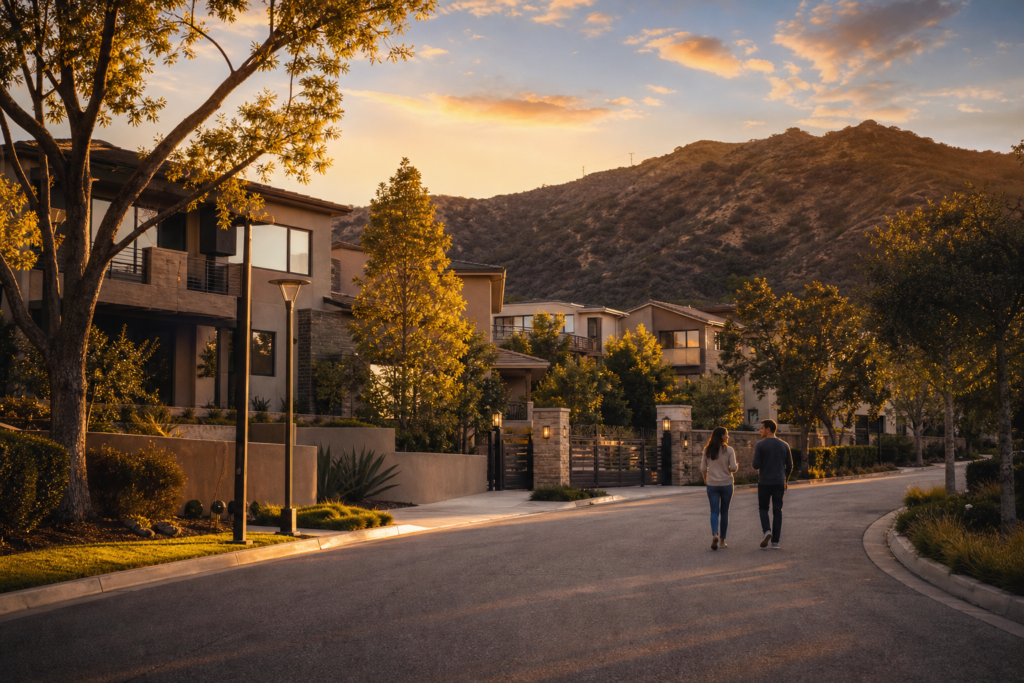
How has Porter Ranch evolved from open ranchland into one of the San Fernando Valley’s most sought-after communities?
Porter Ranch transformed from 19th-century wheat fields and horse ranches into a master-planned community of over 38,000 residents, with median home prices near $1.26M as of June 2026 and a reputation as one of LA’s premier family neighborhoods.
Why the Story of Porter Ranch Matters Right Now
If you’re considering buying or selling in Porter Ranch, understanding how this community arrived at where it is today gives you a real advantage. This isn’t just a history lesson. The forces that shaped Porter Ranch over the past several decades, from master-planned development battles to new construction booms to demographic shifts, are the same forces driving property values and buyer demand in 2026.
With 21 years of experience and over 500 closed transactions across the San Fernando Valley, I’ve watched Porter Ranch evolve in real time. I’ve helped buyers and sellers throughout every pocket of this community, from established resale homes near Rinaldi Street to luxury new construction along Sesnon Boulevard. That on-the-ground perspective is what allows me to connect the dots between where Porter Ranch has been and where your equity is headed next.
So how did a quiet stretch of foothill ranchland become one of the most desirable ZIP codes in Los Angeles? Let me walk you through it.
From Wheat Fields to Suburbs: Porter Ranch’s Early Origins
You might be surprised to learn that Porter Ranch takes its name from a single family. In the late 19th century, Benjamin Porter purchased a portion of the Rancho Ex-Mission San Fernando land grant in the foothills of the Santa Susana Mountains above what is now Northridge, according to Los Angeles City Council District 12 historical records.
For its first several decades, the land was primarily wheat fields. Later, the area’s relative isolation made it a favorite location for movie stars’ horse ranches. If you’ve ever watched *E.T. the Extra-Terrestrial*, you’ve already seen Porter Ranch on screen. Large portions of Steven Spielberg’s 1982 blockbuster were filmed here, with several iconic shots looking down on the early neighborhood from the ridge in Palisades Park.
The Horse-and-Rider Statues: A Lost Landmark
Here’s a detail that longtime residents still talk about: in the late 1960s and early 1970s, two horse-and-rider statues marked the unofficial entrance to Porter Ranch, per City Council District 12 records. They were eventually removed to make way for residential development. One statue was reportedly found in a trash dumpster years later. To this day, their actual whereabouts remain a neighborhood mystery. It’s a small detail, but it captures something real about how quickly this area transformed.
The Master-Planned Community Era That Defined Porter Ranch
The Porter Ranch you recognize today began taking shape in the 1970s and 1980s, and it didn’t happen without a fight.
Much of the community was developed by Nathan Shapell, Chairman and CEO of Shapell Industries, along with his brother David and brother-in-law Max Webb. Shapell, a Holocaust survivor who endured both Buchenwald and Auschwitz, went on to build nearly 80,000 homes through his company, per historical records from community archives. Porter Ranch was one of Shapell’s signature projects, ultimately planned to include over 7,500 homes and three million square feet of commercial space.
What I tell my clients is that this master-planned DNA is exactly what sets Porter Ranch apart from most San Fernando Valley neighborhoods. The intentional layout, the gated communities, the elevation-driven tiering of price points: none of that happened by accident. It was designed from the beginning.
The “Slow Growth” Controversy of the Late 1980s
You should know that the new construction projects completed in Porter Ranch during the 1990s and 2000s were mired in controversy and LA politics, according to community development records from the City of Los Angeles. A $2 billion master plan for real estate and commercial development in this largely undeveloped area was opposed by the “slow growth” movement that was gaining traction through ballot initiatives and court cases.
Los Angeles at that time was grappling with air quality issues, sewage capacity, and flood control challenges from decades of rapid expansion. Locally, existing residents feared the increased traffic that a planned commercial complex would bring. A homeowners group called PRIDE, which stood for “Porter Ranch Is Developed Enough,” organized significant opposition.
The result? Developers scaled back their commercial vision dramatically, reducing a planned 2-million-square-foot commercial complex with office buildings, a hotel, and a movie theater down to roughly 660,000 square feet with no office development. However, the original complement of 3,395 homes moved forward, per LA Business Journal reporting from the era.
This tension between residential growth and commercial development defined Porter Ranch for years, and its echoes still shape the community’s character today.
How Porter Ranch’s Population and Demographics Shifted Over the Decades
The population story of Porter Ranch is one of steady, substantial growth. According to U.S. Census data:
- 2000 Census: 24,923 residents
- 2008 Estimate: 30,571 residents, per LA Department of City Planning
- 2010 Census: 33,708 residents
- 2020 Census: 38,041 residents across 13,217 households
- 2026 Estimate: Approximately 41,996 residents, per ZIP-Codes.com
That’s roughly a 68% population increase over 26 years. And the demographic composition has shifted meaningfully along the way.
In 2000, per Census data, Porter Ranch was described as “moderately diverse,” with 60.9% White residents, 26.8% Asian, 7.5% Latino, and 1.8% Black. By the 2020 Census, the White population share had decreased to 46.1%, the Asian population grew to 32.9%, and the Hispanic or Latino population more than doubled to 16.0%.
Today, over 10,000 Porter Ranch residents were born in Asia, including 2,878 people born in Korea and 1,607 in the Philippines, per Census reporting. The community is also home to a significant Middle Eastern population, with 883 residents born in Iran and 619 in Lebanon. This cultural richness shows up in the dining scene along Rinaldi Street, from Musashi Restaurant’s sushi and udon to the diverse lineup at The Vineyards.
What does that mean if you’re buying here? You’re entering a community that has become genuinely diverse and multicultural while maintaining a strong sense of shared neighborhood identity.
Porter Ranch Real Estate: From $342K to $1.26 Million
Here’s the number that stops people in their tracks. The 2000 Census recorded an average house value of approximately $342,000 in Porter Ranch. As of June 2026, the median single-family sale price sits at $1,262,000, with a median of 22 days on market and a 99.1% list-to-sale ratio, per LA County MLS data.
That represents roughly a 275% increase in home values over approximately 25 years.
The New Construction Factor
A major driver of this price escalation has been new construction. Shapell’s estate is now owned by Toll Brothers, according to development records, marking the transition from the original developer to a national luxury homebuilder. Toll Brothers communities in Porter Ranch, including Westcliffe (with Summit and Skyline collections starting above $2.2M), Hillcrest, and the Canyons at Porter Ranch with its Peak Collection starting in the mid-$1 millions, have consistently pushed the top of the market higher.
I’ve worked extensively with builders like Toll Brothers in Porter Ranch, guiding clients through lot selection, upgrade negotiations, and closing strategy on new builds along Sesnon Boulevard and the upper hillside communities. Knowing how to negotiate with a builder, understanding what’s flexible and what isn’t, is a skill that takes years to develop. Having closed over 500 transactions and earned a 5.0 out of 5 star rating across 103 client reviews, I bring that depth of experience to every new construction conversation.
Income Growth Matching Home Prices
Incomes have kept pace, which is one reason why Porter Ranch hasn’t experienced the affordability crises seen in other LA neighborhoods. Median household income rose from approximately $102,602 in 2011 to $148,281 in 2024, per Census data compiled by ZIP-Codes.com, representing roughly a 45% increase over 13 years. By 2025 estimates, median household income reached $156,725, according to HometownLocator.
The Commercial and Lifestyle Transformation of Porter Ranch
Remember that scaled-back commercial project from the 1990s? The irony is that Porter Ranch eventually got everything its residents wanted, just on different terms and a different timeline.
The Vineyards at Porter Ranch, located at the corner of Rinaldi Street and Porter Ranch Drive, has become the social heart of the community. This open-air destination features Whole Foods Market, AMC Porter Ranch 9, restaurants like Lure Fish House, Finney’s Crafthouse, Salina Italian Kitchen, and Gus’s BBQ, plus fitness studios, boutiques, and a 4,000-square-foot community room for events, per community development records.
Porter Ranch Town Center adds another 42 stores for everyday shopping. The grocery lineup is unusually strong for a single neighborhood: Ralphs, Amazon Fresh, and Whole Foods Market are all accessible within minutes.
Educational attainment has also risen sharply. In 2000, per Census data, 51% of residents aged 25 and older held a four-year degree, which was already high for the city. By recent estimates, 62.5% of residents 25 and older hold a bachelor’s degree or higher, and 92.7% have graduated high school, per Census-derived data from ZIP-Codes.com.
Westside Migration: The Newest Chapter
One of the most significant trends I’m seeing in 2026 is Westside buyer migration. Families from Brentwood, Pacific Palisades, and other Westside neighborhoods are discovering that Porter Ranch offers comparable schools and amenities at a fraction of the cost. Westside sub-markets typically command $800 to $1,500 per square foot, compared to Porter Ranch’s $526 per square foot, per current market data. That means you can get nearly double the space in Porter Ranch for the same investment.
Frequently Asked Questions About Porter Ranch Real Estate
How much do homes cost in Porter Ranch in 2026?
The median single-family sale price in Porter Ranch was $1,262,000 as of June 2026, per LA County MLS data. The full spectrum ranges from around $431,000 for condos to $3.7M for luxury estates in guard-gated communities. Price per square foot sits at approximately $526. Sub-neighborhoods like Porter Ranch Estates carry a higher median of approximately $1,485,000 as of May 2026.
How fast are homes selling in Porter Ranch?
The median days on market in Porter Ranch was 22 days as of June 2026, per LA County MLS data. The list-to-sale ratio of 99.1% indicates that well-priced homes are selling very close to asking price, and the market still favors sellers.
What was Porter Ranch like before it was developed?
Porter Ranch was originally wheat fields and horse ranches in the foothills of the Santa Susana Mountains. Benjamin Porter purchased the land in the late 19th century, per Los Angeles City Council District 12 records. Major residential construction didn’t begin until the 1970s, making it the last portion of the San Fernando Valley within LA city limits to be developed.
Who originally developed Porter Ranch?
Nathan Shapell, through Shapell Industries, along with his brother David and brother-in-law Max Webb, developed much of Porter Ranch as a master-planned community, per community historical records. Shapell’s estate is now owned by Toll Brothers, which continues to build luxury homes in the area.
How has the population of Porter Ranch changed?
Porter Ranch grew from 24,923 residents in the 2000 Census to 38,041 in the 2020 Census, according to the U.S. Census Bureau. Estimates for 2026 place the population at approximately 41,996, per ZIP-Codes.com. The community has become significantly more diverse during that period.
What schools serve Porter Ranch?
Porter Ranch is served by top-rated schools that rank in the top 5% statewide, including Granada Hills Charter High School and Robert Frost Middle School, along with strong elementary options. Educational attainment among residents is notably high, with 62.5% holding a bachelor’s degree or higher, per Census data from ZIP-Codes.com.
Is Porter Ranch a good investment in 2026?
With home values increasing roughly 275% since 2000 (from approximately $342,000 to around $1.26M as of June 2026), Porter Ranch has demonstrated strong long-term appreciation. Year-over-year prices are up 3.3% as of June 2026, per LA County MLS data, and the seller-favorable market conditions continue.
What is The Vineyards at Porter Ranch?
The Vineyards is Porter Ranch’s premier open-air shopping, dining, and community destination at Rinaldi Street and Porter Ranch Drive. It features Whole Foods Market, restaurants like Lure Fish House and Finney’s Crafthouse, AMC Porter Ranch 9, and a 4,000-square-foot community room, per community development records.
What new construction is available in Porter Ranch?
Toll Brothers is the dominant builder in Porter Ranch as of 2026, with communities including Westcliffe (Summit and Skyline collections starting above $2.2M), Hillcrest, and the Canyons at Porter Ranch with its Peak Collection starting in the mid-$1 millions, per builder listings data.
How does Porter Ranch compare to Westside LA neighborhoods?
Porter Ranch’s price per square foot of approximately $526 is significantly lower than Westside sub-markets, which typically command $800 to $1,500 per square foot, per current market data. Families are increasingly discovering that Porter Ranch offers comparable schools and amenities at 50 to 60% of Westside pricing.
The Bottom Line
Porter Ranch’s transformation from Benjamin Porter’s wheat fields to a $1.26M-median master-planned community is one of the most compelling neighborhood stories in Los Angeles. If you’re considering buying, selling, or simply evaluating your equity position in this community, understanding these layers of history and growth helps you make sharper decisions.
As the founder of the Scott Himelstein Group with over 21 years of experience and 500 closed transactions, Porter Ranch isn’t just another market on my list. It’s an area where I’ve built long-term relationships and a deep understanding of how every pocket behaves, what drives demand, and how to position you for the best possible outcome. Whether you’re looking at new construction from Toll Brothers along Sesnon Boulevard or a resale home near Rinaldi and Mason, I can help you navigate this market with confidence. Reach out to me, Scott Himelstein, at 818-396-3311 or visit ScottWorks4u.com to start the conversation.
Work with Scott