

How Granada Hills Caters to Different Generations of Homeowners
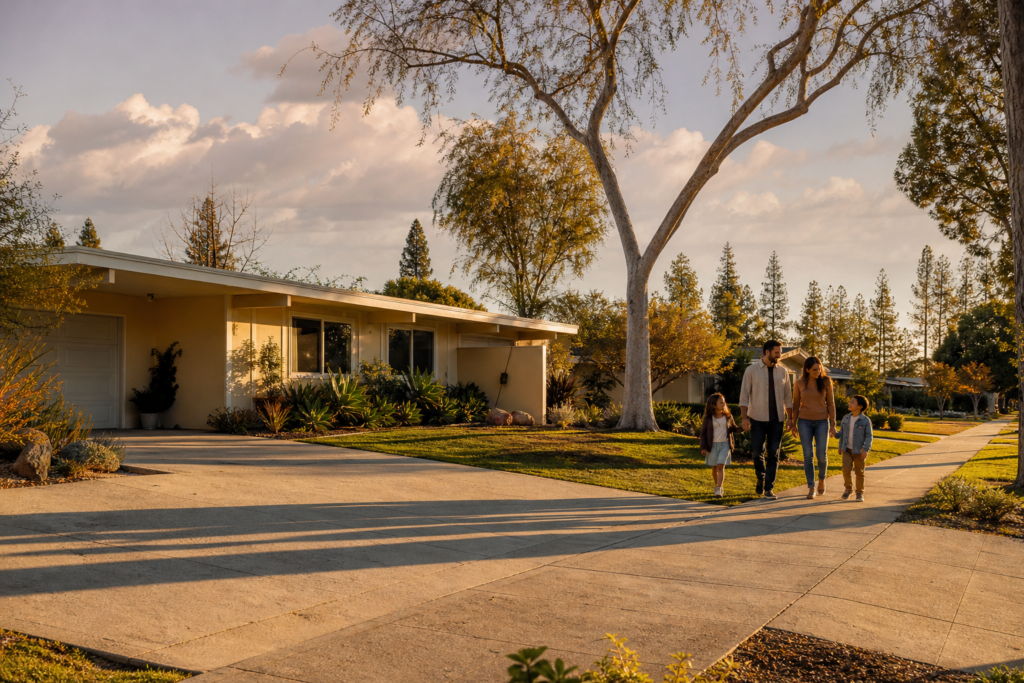
What makes Granada Hills such a strong fit for Baby Boomers, Gen X families, and Millennial buyers alike?
Granada Hills works for every generation because its housing stock spans seven decades, its neighborhoods break into distinct price tiers, and its schools, lifestyle amenities, and lot sizes deliver something specific for every stage of life.
Why This Matters Right Now in Granada Hills
If you’re shopping for a home in the San Fernando Valley in 2026, you’ve probably noticed that most neighborhoods skew toward one type of buyer. Granada Hills is different. With a median age of 43.1 years, per U.S. Census data for ZIP 91344, this community has an unusually balanced generational mix: roughly 13,180 residents aged 25 to 44 (Millennials), 7,383 residents aged 45 to 54 (Gen X), and approximately 13,194 residents aged 55 to 74 (Baby Boomers).
What does that actually mean for you? It means the neighborhood isn’t aging out or turning over all at once. It means the infrastructure, the businesses, and the housing itself have evolved to serve people at very different life stages. And with 268 closed sales tracked over the last six months at a median closing price of $1,000,000, per Resideline data as of September 2026, the market is proving that demand is real and broad across generations. Having closed over 500 transactions across the San Fernando Valley over the past 21 years, I see this demand firsthand, and Granada Hills is one of the most generationally diverse markets I work in.
Baby Boomers and Why Granada Hills Keeps Them Rooted
If you’re a Baby Boomer in Granada Hills, there’s a good chance you bought your home decades ago, and you’re sitting on significant equity. But here’s what I find fascinating about this market: Boomers aren’t leaving. They’re staying, and the community is built to support that.
Single-Story Living and Aging in Place
The single-story ranch home is the most requested configuration among aging-in-place buyers and empty nesters in Granada Hills. The 1950s and 1960s ranch homes that fill the flatlands south of the 118 Freeway were designed for exactly this kind of long-term livability, with no interior stairs, wide hallways, and generous lot sizes.
Knollwood and the Country Club Lifestyle
For Boomers who want something more elevated, the Knollwood luxury hillside pocket delivers a median price range of $1.6M to $2.2M, per Resideline data. This area attracts golf course proximity buyers and equestrian-adjacent buyers, often empty nesters downsizing from larger estates or relocating from other Valley golf communities. They’re price-sensitive but quality-driven, paying premiums for Country Club adjacency, views, pool and outdoor living, and mature landscaping.
ADUs for Multigenerational Families
A Granada Hills lot at 10,000 square feet or more can support an ADU up to 1,200 square feet under current rules. For Boomers who want to keep family close, whether that’s an adult child saving for their own home or an aging parent who needs nearby care, this is a game-changer. The ADU conversation is no longer optional in this market; it’s a strategic asset that directly impacts your home’s long-term value.
Gen X Families and the Granada Hills Charter School Effect
If you have school-age kids and you’re evaluating the northwest San Fernando Valley, Granada Hills should be at the top of your list for one reason above all others: Granada Hills Charter High School.
The Premium You’re Paying For, and Why It’s Worth It
Granada Hills Charter holds a GreatSchools rating of 9 out of 10, ranking in the top 14% of California schools, with math proficiency at 55% versus the state average of 35% and reading proficiency at 75% versus 47% statewide, per GreatSchools data. According to CRMLS data, the charter school effect translates to approximately $110,000 to $140,000 on a median-priced home. That’s not an abstract number. It means you’re investing in your children’s education and your equity simultaneously.
North of Rinaldi: The Gen X Sweet Spot
The area north of Rinaldi Street, near the Porter Ranch border, prices between $900K and $1.2M and features newer homes, large lots, and quiet streets. This is the move-up buyer market. Lot sizes of 8,000 square feet and above on the flatter grid streets between Rinaldi and Chatsworth consistently attract strong interest from families who need space. Pool homes here command a $50,000 to $100,000 premium over comparable non-pool listings, and that gap has held steady.
Because I’ve worked the Porter Ranch border area consistently, I understand how each pocket behaves, what drives demand, how pricing shifts, and what buyers are looking for at different price points. This knowledge of both Granada Hills and neighboring Porter Ranch gives my clients an edge when making competitive offers in this corridor.
Millennial Buyers Finding Their Entry Point in Granada Hills
So where do you fit if you’re a Millennial buyer stretching to make your first purchase at or near the million-dollar mark? Granada Hills actually has more options than you might think.
Relative Value Compared to Neighboring Markets
Granada Hills’ median is roughly 20% below Porter Ranch’s, according to market research, with larger average lot sizes (8,400 square feet versus 5,800 square feet) and more established neighborhood character. For Millennials doing the math, that difference could mean the gap between qualifying and not qualifying.
Granada Hills South: The Accessible Entry Point
The 1950s to 1970s tracts in Granada Hills South run $850K to $925K, per Resideline data. This pocket, below the 118 near Devonshire, offers moderately priced to upscale homes that give you a foothold in one of the Valley’s strongest school districts and most stable communities.
Remote Work and ADU Income
Here’s where it gets strategic. With 28% of Granada Hills buyers identified as remote work buyers per market research, the demand for home office space is reshaping what “the right home” even means. And if you purchase a property with ADU potential, the rental income can meaningfully offset your monthly housing costs. Total typical monthly housing cost for a four-bedroom home with 20% down runs $7,200 to $8,800, so every dollar of supplemental income matters.
What I tell my clients navigating this price range is that the move-in-ready factor is everything. Move-in-ready homes in Granada Hills go in 14 to 22 days at or above asking. Homes needing significant work sit 45 to 60 days or more. If you’re a first-time buyer, targeting a well-priced listing under $900K and being ready to move fast is the playbook.
The Granada Hills Lifestyle That Bridges Every Generation
Real estate is more than square footage and price per foot. One of the reasons I’ve seen Granada Hills hold its value so consistently is the lifestyle layer that keeps people of all ages invested in staying.
Old Granada Hills: The Heart of Community
Walk down Chatsworth Street between Zelzah and Balboa on a weekend morning and you’ll understand immediately. The small shops, restaurants, and businesses lining this stretch are reminiscent of a small-town Main Street, anchored by the Granada Hills Chamber of Commerce, founded in 1928. You’ll find Lulu Bee Haven for brunch with a warm neighborhood vibe, Numero Uno Pizza where every long-time resident has a story, and Siam Cuisine on Balboa Boulevard serving some of the best Pad See Ew in Los Angeles.
For Boomers, this is the neighborhood they’ve watched evolve. For Gen X families, it’s weekend tradition. For Millennials, it’s the walkable community feel they left denser LA neighborhoods to find. And everyone knows about the Deodar Pine Trees along White Oak Avenue, planted in 1932 and designated a Los Angeles Historic-Cultural Monument.
Dining That Spans the Generations
The Odyssey Restaurant sits on a hilltop with panoramic Valley views and draws the fine-dining and special-occasion crowd. House Roots Coffee anchors the morning routine for the local crowd. This range, from coffee shop regulars to anniversary dinners, reflects exactly the kind of generational diversity that defines Granada Hills.
What Every Generation Should Know About Granada Hills Pricing in 2026
Understanding which pocket of Granada Hills aligns with your generation and your budget is critical. Here’s how the market breaks down, per Resideline data as of 2026:
- Knollwood and Hillside Luxury: $1.6M to $2.2M, best suited for established Boomers and affluent Gen X
- North of Rinaldi and Charter School Corridor: $900K to $1.2M, ideal for Gen X families and move-up buyers
- Mid-Granada Hills: $850K to $1.05M, depending on the pocket and vintage of the home
- Granada Hills South (older tracts): $850K to $925K, the most accessible entry for Millennials
The list-to-sale ratio sits near 99.1% with year-over-year appreciation of roughly 3.0%, per May 2026 MLS trailing data. This is a stable, appreciating market, not a speculative one. With 103 five-star client reviews and a 5.0 out of 5 rating, I can tell you that the clients who thrive here are the ones who understand these micro-zones before they start touring.
Frequently Asked Questions About Granada Hills for Every Generation
Is Granada Hills a good place for retirees to age in place?
Yes. The abundance of single-story ranch homes from the 1950s and 1960s, combined with lots averaging 10,000 square feet or more in the north corridor, makes modifications for accessibility straightforward. Proposition 13 benefits also keep long-time owners’ property taxes significantly lower than what new buyers pay.
What makes Granada Hills Charter High School so important for home values?
According to CRMLS data, homes near Granada Hills Charter High School command a premium of approximately $110,000 to $140,000 on a median-priced home. The school holds a 9 out of 10 GreatSchools rating with reading proficiency at 75% versus the 47% statewide average, per GreatSchools data.
Can Millennials realistically afford to buy in Granada Hills?
Granada Hills South offers 1950s to 1970s tract homes between $850K and $925K, per Resideline data. Combined with ADU income potential and competitive pricing relative to neighboring Porter Ranch, first-time buyers have viable paths into this market.
What is the median home price in Granada Hills in 2026?
Resideline tracked a median closing price of $1,000,000 as of September 2026 across 268 closed sales over the prior six months. The middle half of sales closed between $849,999 and $1,190,000.
How fast do homes sell in Granada Hills?
Move-in-ready homes sell in 14 to 22 days, often at or above asking price. Homes needing significant work or priced above their condition sit 45 to 60 days or more, per MLS trailing data.
Are ADUs popular in Granada Hills?
Very. A Granada Hills lot at 10,000 square feet or more can support an ADU up to 1,200 square feet under current rules. ADU-equipped properties are appreciating fastest in the area, per market research, appealing to Boomers housing family and Millennials seeking rental income.
What does a monthly payment look like for a four-bedroom home?
Total typical monthly housing cost for a four-bedroom home with 20% down runs $7,200 to $8,800, per market research. This varies by pocket and price tier.
How does Granada Hills compare to Porter Ranch?
Granada Hills’ median is roughly 20% below Porter Ranch’s, with larger average lot sizes (8,400 square feet versus 5,800 square feet), per market research. You get more established character and more space for the dollar.
What percentage of Granada Hills residents are renters?
Renters occupy 26.4% of the housing stock in Granada Hills, per Census data for ZIP 91344. The remaining majority are owner-occupied households.
Which pocket of Granada Hills is best for families with young children?
The charter school corridor and the area north of Rinaldi, priced between $950K and $1.3M, consistently attract the highest family demand due to top-rated schools, larger lots, and proximity to parks and community amenities.
The Bottom Line on Granada Hills for Every Generation
Granada Hills is one of the rare San Fernando Valley communities where Boomers, Gen X, and Millennials aren’t competing against each other. They’re drawn to different pockets, different price points, and different lifestyle features within the same neighborhood. That’s what makes it work.
Whether you’re evaluating single-story ranch homes in Old Granada Hills, the charter school corridor for your growing family, or a Granada Hills South starter home with ADU potential, the key is understanding which micro-zone matches your life stage and your budget. As a Certified Trust and Probate Expert and Porter Ranch real estate expert with over 21 years in this market, I help buyers and sellers across Granada Hills and the broader San Fernando Valley navigate these decisions every day. If you’re ready to figure out which pocket of Granada Hills is right for your generation, call me at 818-396-3311. I’m Scott Himelstein with the Scott Himelstein Group, and this is my neighborhood.
Work with Scott